We get a lot of comments from readers and emails from people concernced about how the Government is changing the rules on contractors.
Contracting is a key part of the UK employment market with nearly 15% of the UK population registering at self-empoyed. Of course in reality, a whole range of people don't register as their incomes are too low to really matter from a tax perspective or perhaps their job descriptions are not really appropriate.
However, HMRC and the Government have long seen that contracting can be bad on two counts. One is that Public and Private sector companies use contractors as an accounting trick to reduce headcount and employers NI (see all BBC presenters as a great case of this) and secondly that it allows contractors to create synthetic situations where they are really employed but are paying taxes at a much lower rate.
The loan charge was an attempt to claw back taxes owed by people who had used offshore vehicles to lower their taxes. On balance, I think they Government were wrong to backdate such a change, as a backdated law is never a good one and people were not breaking the law when they entered into these agreements. It would have been better to outlaw the schemes and start afresh, but on the other hand everyone entering these schemes new full well it was a tax avoidance ruse and for no other purpose - nonetheless, it is not a terrible aspect of HMRC that they can at a whim choose to retrospectively change tax laws (what would w say if they decide to increase income tax by 5% retrospectively...)
Now the IR35 rules are changing and it is having a big impact, major companies such as Lloyds and Barclays are firing contractors on mass and instead hiring fewer full-time people to replace them. It need not be like this, they coudl take on all the same people on a zero hours basis for example. the balance in the past has been Contractors (and it is minaly construction and IT on a large scale in terms of sectors) taking the risk of patches of unemployment and no benefits for the much lower tax cost of the terms of contracts. For contractors doing up to 6 months nothing really changes, the big change is in trying to do a year or more of contracting on a single job. As the real world shows it, it is forcing employers to think more carefully about how they resource their large, long-term projects.
At the time of Brexit, this is an odd thing to pursue as it does seemingly reduce labour market flexibility in order to improve the HMRC tax take. In terms of an election, it loses votes from contractors whilst likely making little difference to those employed, although there are a few vote sin making celebs squirm in public.....still, I don't see it as sch a big deal and overall am in favour or employee taxes being fair across the board. The comments on this will no doubt be interesting...

Showing posts with label employment. Show all posts
Showing posts with label employment. Show all posts
Wednesday, 16 October 2019


Friday, 25 May 2012
A Beecroft in his bonnet

The Beecroft report has come up a bit recently. Whilst I don't agree with his main point, that employees may be fired within two years without an explanation, there are some good bits. And a hell of a lot of spin.
On the main point, what is proposed is a kind of mutual termination. Employment is ended and the employer must pay a redundancy to the the employed. This occurs in failing businesses or downsizing businesses all the time, so its not a bad idea. But the report does make clear that it is the employee that has the final decision. If I want you out, I just have to pay you off.
the usual exceptions of religious, racial or sexual, and now age would still apply.
The reasons stated for the need for this doubling of the trial period are sound. Employees can lose motivation. They can be promoted, but be no good in their new role. They can suddenly have issues with a new boss or working practice. The workplace is always changing. As are the workforce themselves.It makes sense to not fix an employee in place early on.
However, I don't think its needed. Even though I have had plenty of cases of year 2 dismissals.
Then again, I've had year 10 dismissals. And a memorable year 20.
But there are far more in the first six months.
I had a flatmate who was dismissed at 11 months, 2 weeks from his managers job with a very well known retailer. he wasn't alone. 40 of the 'trainee' managers were dismissed. The whole thing wa a scam. Trainee wages for management posts. The trainees only ever got a perm job IF the company had achieved its expansion plans. Its just unfair. And wrong.
Already many employers employ their staff on short contract, or zero hour contracts. If someone is crap..they get no more work. they aren't sacked. They are just in call until they get the message.
Where the report discusses tribunals it addresses some of the same issues, but better.
There is a real problem between small and large employers. A large firm will have a bucket full of Hr and training people. It will appreciate clearly defined rules and structures, so it can follow the letter of the law and never go wrong. It cares less how long the process takes. A small business has no Hr. No trainer. No one to attend counseling and training and court sessions.
Beecroft proposes making small businesses{undefined} exempt {possibly} from some of the employment rules and certainly from the disciplinary procedure.
I fully agree.
I recall a relative telling me they had fired an employee after they found he had been buying equipment {without authority} and taking kickbacks and using his credit card for holidays and giving company car to his girlfriend and numerous other breaches. I'm staggered when a £60-£70k salary person does this, but its surprisingly common.
I was horrified when the relative told the tale as it sounded like an unfair dismissal.
Sure enough the ex employee sued for £50k. 1 years worth of legals and stress, and £35k in solicitors fees.
The employer won, but still had to pay their own costs. This is where the system is a nightmare. The process is far more important the guilt or innocence. Not saying a few words at the right time invalidates the case. Saying 'get out' for instance, in the heat of the moment, to an employer caught with a hand in the till, makes them not guilty. Worse, it makes the employer guilty and liable to pay for unfair dismissal. Lawyers know this. That's why so many cases are settled out court with the employer paying £x thousands just to end a problem. That is just as unfair as a two year probation.
There are other issues in the report. Pensions and immigration laws {the current simple rules on employing someone from outside the UK run to 1300 pages. The 13 acts on immigration run to 10,000 pages. If an employer employs an illegal, the employer is liable. there is no excuse. Not even for Baroness Scotland, the attorney general..}
Fees to bring an unfair dismissal case {to reduce them}. Redundancy and equal pay audits.
But the most important, I would suggest, is the discrepancies in tribunals verdicts and the ridiculous processes that they require to get those verdicts.
That should be addressed as a priority.
Let the politically sensitive two year employment go, Adrian.
Its really not that big a deal.
Friday, 30 January 2009
John Prescott's top fifty. {3}
 Not many readers have praised too many policies so far. But it looks like minimum wage is considered a success.
Any more from this lot?
21. Child benefit up 25 per cent since 1997
{shame the 10p tax botch took some away. Still, take it as a victory.}
22. Created Sure Start to help children from low income households
{ And what a waste it has been. 3billion pounds in 4 years. The Guardian, hardly a hostile, paper said in 2006,"Today's Guardian offers the bleak assessment that Sure Start 'harms children who need it most". It is a typical well intentioned, and reasonably good idea, badly implemented, unmonitored and unrefined. Not enough success to earn a full credit.}
23. Introduced the Disability Rights Commission
{Its closed now. Not sure what real help it gave. Its certainly a massive cost for business.No credit}
24. £200 winter fuel payment to pensioners & extra £100 for over-80s
{and an extra £60 for the cold winter payments to over 65's too. Come on Prezza. Update the list ,its been around a while now, blindly copied onto the web pages of the faithful. Pensioners have benefited under NL. Except for the devastation wreaked upon them by care home costs, council tax and fuel/food price increases etc. Half a credit, as a lot of it is just sleight of hand}
25. On course to exceed Kyoto target to reduce greenhouse gas emissions by 2010
{Not really. Rises in carbon emissions Year on Year reported rises for 5 years out of eight And making the future 80% cuts is just as unlikely}
26. Negotiated the historic Good Friday Agreement in Northern Ireland {Yes. John Major got it started and Prime Minister Blair finished it. Its not the best deal ever made, and strongly resented by some, but it was always going to be really hard to bring about. But .. yes, full credit. At last something to call a legacy}
27. Over 30,000 more teachers in England schools.
{ In fact 110,000 odd new teachers by 2006 according to Hansard. How many left the profession was not disclosed. Still, there was a teacher shortage problem, less so now, so full credit}
28. All workers now have a right to 4 weeks’ paid holiday
{ erm ..4.8 weeks John. I know you cribbed the list that appeared on Mr Dale's a while back by Hazel Blears but you could at least update it. 5.6 weeks annual leave from April. If you employ 9 workers you would need a tenth, just to cover the holidays. Cost to government.Zero. Cost to business..massive. No credit here. No one was asking for more than 4 weeks. Its a union sop, that falls squarely onto business. Suspect it was a Euro alignment rule anyway. No Credit}
29. A million pensioners lifted out of relative poverty. {How so? More money given back but pension raids, stealth taxes, energy and food costs can't have lifted 1million out. Now with near zero savings rates those happy pensioners may not be so happy. Just statistics JP. No credit.}
30. 800,000 children lifted out of relative poverty { another completely meaningless figure, from a completely meaningless euro measure.."In August 2005 as research showed that the income gap between rich and poor has widened significantly under Labour" Nope. No credit.}
As Sven may have said..Some good..some not so good.
2 to go
Tuesday, 2 October 2007
Working Hours
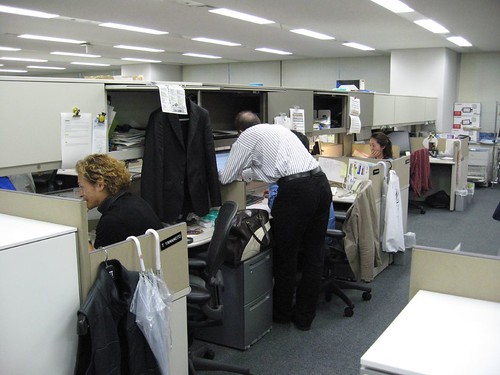
Thanks to all the voters who entered into the poll on hour many hours we all work a day. There were 50 votes so I make that quite a decent effort for one of these polls. The results are still in the sidebar until tomorrow when Nick Drew has new one to go in.
Here are the results for analysis:
<7 | 16 (32%) |
8 | 16 (32%) |
10 | 12 (24%) |
12+ | 6 (12%) |
I am pleased to see that so many people manage to work less than 7 hours a day. You only live once and I don't think at the pearly gates or wherever we end up you will look back and wish you had spent more time in the office. Some of you probably have better things to do than work anyway- Gordon steals most of it anyway!
8 hours too is a commendable achievement in clocking on and off to an exact time. If you voted in this category is it because you work just to get the money or are indeed your employers (yourself included possibly) fair and honest?
Part of me thinks thought that some explanation for the 64% in these two categories is a dissatisfaction with your work ?
Then we get to the 1/3rd of us who seem to put the hours in. This poll was inspired by my current 70 hour weeks in a new job. Hopefully once I am up to speed this can be reduced to something more akin to the EU maximum (48 hrs). On the other hand, I don't hate what I do and am paid well there is little to moan about beyond not seeing the family quite enough. My guess is that this applies to most of the voters here, some of whom are no doubt self-employed too as building a business requires endless work; and for little reward in the beginning too.
That is my take, what is yours?
Subscribe to:
Posts (Atom)