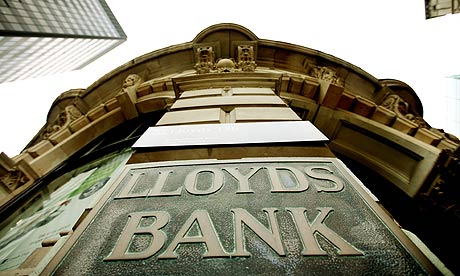
More and more the Government seems to be moving towards trying to raise some much needed cash from RBS and Lloyds by selling its stake as soon as possible. There are also other reasons, such as the about to be broken EU State Aid ruling which means the said banks should be broken up a bit, which has not happened. Best if the Government was not in line for the fine on this....
However, the real issue has centred for a long-time around the shareprice. I was all in favour last year of the concept of giving away the shares to the public and a think tank has come out today with the same idea. The idea still has much merit in that it is after all our money the Government has used. it is a good counter-point to the socialists who use our money for their gain, for the Conservatives to present back to the public their own investment - at a loss incurred by the socialists too.
there is though a better idea. The Government does not need to make a loss at all. All they need to do is instruct the bank, soon to be making profits once more, to engage in share buyback processes. This way, by cancelling shares, the price of the shares will rise. At some point in the not too far future they will be above the strike price and every further purchase will be a profit for the taxpayer or alternatively a real Sovereign Wealth Fund buyer can be found.
This way too the shareholders, mainly pension funds and retail investors, will see some return for their investment. RBS is currently valued at £37 billion, if it can clear £2 billion a year profits, which is entirely possible for this year, then that is 6% of equity bought back. The price will go up considerably over time and at little cost and with no expensive IPO or share hand-out process. Lloyds would be largely in the same bracket.
Share buybacks - the simple solution to a difficult problem. There is still the idea of break-up, but this is just silly and I will come back to later in the week.
Showing posts with label Lloyds Banking Group. Show all posts
Monday, 10 June 2013
Friday, 24 February 2012
Banks still an accounting muddle as losses continue
RBS and Lloyds Banking Group have now both reported their 2011 results. And how disappointing that 4 years after the crash, they are still losing £5 billion a year between them. Compare and contrast HSBC and Barclays, yet to post a loss and still making multi-billion profits. Another example in fact of how wrong it is to tar all bankers with the same brush.
At the heart of the losses for both Lloyds and RBS are the continuing losses on loans made in the run up to the credit crunch. Every 'Non Core' sale results in another hefty loss being taken, as the banks shrink, their losses increase. At some point soon, probably next year, the worm will turn. The core retail banks are profitable as are the corporate bank loans made since 2008. The day will come when profits from these outweigh the losses of the old loans - indeed most loans are 5 years at the very most, so one would think that 2013 would be the turning point.
What is odd overall though is the impact of IFRS accounting. With all these bad loans, the banks are able to massage their figures, taking losses when they can. It's a bizarre bit of accounting that ignores mark to market in reality and fully embraces the more fun, mark to make believe. banks too cheat by rolling over bad loans at poor rates in order to not take the hit of closing out at a loss - this latter point is why 2013 won't be the end, but the beginning of the end of the crisis.
Worse new though is the impact of events. Every year the banks are facing more headwinds. This year is what the PPI scandal - a mis-selling tale that started a very long time before any of the current management were in place. Plus, of course, Greece. The thing is every year there is some external crisis - Eurozone, Japan, abysmal markets. It's hard to see when the excuses will stop. it's quite likely the taxpayers will get their money back on a nominal basis - but at a distant point in the future, inflation will have had its way on the real investment.
At the heart of the losses for both Lloyds and RBS are the continuing losses on loans made in the run up to the credit crunch. Every 'Non Core' sale results in another hefty loss being taken, as the banks shrink, their losses increase. At some point soon, probably next year, the worm will turn. The core retail banks are profitable as are the corporate bank loans made since 2008. The day will come when profits from these outweigh the losses of the old loans - indeed most loans are 5 years at the very most, so one would think that 2013 would be the turning point.
What is odd overall though is the impact of IFRS accounting. With all these bad loans, the banks are able to massage their figures, taking losses when they can. It's a bizarre bit of accounting that ignores mark to market in reality and fully embraces the more fun, mark to make believe. banks too cheat by rolling over bad loans at poor rates in order to not take the hit of closing out at a loss - this latter point is why 2013 won't be the end, but the beginning of the end of the crisis.
Worse new though is the impact of events. Every year the banks are facing more headwinds. This year is what the PPI scandal - a mis-selling tale that started a very long time before any of the current management were in place. Plus, of course, Greece. The thing is every year there is some external crisis - Eurozone, Japan, abysmal markets. It's hard to see when the excuses will stop. it's quite likely the taxpayers will get their money back on a nominal basis - but at a distant point in the future, inflation will have had its way on the real investment.
Wednesday, 4 August 2010
Time to sell Lloyds to Qatari's
Yes, Lloyds Banking Group results are out today. What a turnaround they are, moving to a £1.6 billion profit at the half year. How have they done it? In short in two ways, firstly writing back some of the losses on bad debt and secondly increasing the margin on their key mortgage, banking and insurance products - plus of course a healthy slug of firing thousands of workers!Given the terrible position LLoyds was in when it was forced to swallow HBOS whole in 2008 - a meal with enough fatal poison for anyone, this is a good news story.
Even better the shareprice of Lloyds is up to 72p this morning, a nice 15% ahead of where the Government bought in. Now is the time to start the process of getting rid of this overhang. the shareprice is not going any further north whilst everyone knows the biggest shareholder wants out. This is as good as it gets.
On top of that, next year is not so good, Lloyds has billions in open market refinancing to do which it will get away - but only at a big cost to its operating margin. This year is still one pumped by stimulants - next year won't be.
The sensible option for the Government is to get on with the disposal to a willing buyer now, whilst the sun is shining. The markets are unpredictable as is the economic environment. I have little hope though that Government is nimble enough for the task at hand.
Thursday, 29 October 2009
Labour set to blow financial markets up, again
Reports abound this morning that Alistair Darling is looking to allow Lloyds Banking Group to escape the clutches of the Government Asset Protection Scheme. Well, after all the leaking and discussions recently this is not a great surprise.However, Lloyds will have to raise £25 billion to do this and the Government will have to be in for over £11 billion to make this happen. Ouch. That is a lot more taxpayer money being sent out to a risky banking institution. So why do it?
Well, if Lloyds does not pass £250 billion of bad debts to the Government then the UK exposure is just with RBS and this is a much more palatable number for the treasury. However, that assumes that the debts will default at a high rate. To reach £11 billion equates to a default rate of near 5%.
However, if Lloyds is faced with the same default rate or higher then the bank won't make it. Particularly if the European Commission make it sell of profitable retail arms and keep the huge loss-making loan books of HBOS.
Oh dear, that is the plan. When the markets figure this out then Lloyds shares will be panned once more and instability will return to the markets.
This is a no-win scenario for the Government, but the APS is at least designed to underpin the banking system. The new plan introduces some big risks into the market just at a time of fragility. It could not be more badly timed.
Wednesday, 5 August 2009
Lloyds Banking Group: Car crash success
Wow, what a set of results for the giant state-sponsored Lloyds Banking Group. For the first half of this year it has lost only £4 billion, less than the five analysts thought it would. Still much more than LLoyds thought it would but, hey so what? The shares have been up as much as 13% today.
That is a huge boom for a FTSE100 company. There must be some great high fives going on in the boardroom.
Quite how reality bites into this utopia is not hard to see. HBOS loans are approaching default rates of 8% - that makes Northern Wreck look sober and conservative. HBOS is a toxic virus which has invaded Lloyds and is right now trying to lay waste to its new host.
Lending as a whole is being shrunk in the current market, except for not very competitive mortgage deals. So much for the Government insisting on increasing lending to corporates.
Also there is the small matter of the negative goodwill (i.e. HBOS worth more than Lloyds accounted for). This can all be undone with future bad losses. It is more accounting hocus pocus.
At the moment in the market, everything is being read as a good sign, but LLoyds ain't healthy and won't be for years. That bodes ill for both the economy and the taxpayer
That is a huge boom for a FTSE100 company. There must be some great high fives going on in the boardroom.
Quite how reality bites into this utopia is not hard to see. HBOS loans are approaching default rates of 8% - that makes Northern Wreck look sober and conservative. HBOS is a toxic virus which has invaded Lloyds and is right now trying to lay waste to its new host.
Lending as a whole is being shrunk in the current market, except for not very competitive mortgage deals. So much for the Government insisting on increasing lending to corporates.
Also there is the small matter of the negative goodwill (i.e. HBOS worth more than Lloyds accounted for). This can all be undone with future bad losses. It is more accounting hocus pocus.
At the moment in the market, everything is being read as a good sign, but LLoyds ain't healthy and won't be for years. That bodes ill for both the economy and the taxpayer
Monday, 27 July 2009
Privatise the profits: LLoyds Banking Group
Lloyds Banking Group has had a fairly good couple of weeks on the stock market,. The market has gone up 10% in the last two week, Lloyds has gone up 25% in the same time. Why could this be?Well for one, the bank has been hinting at making a profit in the second half. As one would expect though, there is more to this than meets the eye, as actually profits are being 'brought forward' (what a great new Labour spin term that is!) to help Lloyds now. Later come the losses when hopefully the economy has recovered.
Secondly, the end of the process of putting loans into the Government's Insurance Scheme is nigh. Here Lloyds have made a huge winning bet. All their worst loans are going into this scheme - so most of HBOS in fact. As taxpayer's we are responsible for 90% of the losses. So the most Lloyds could ever lose is £25 billion, but it is likely to be far short of this, even in worst case models.
Thanks to these two events, even the bearish banking broking community is upgrading Lloyds to a buy at 80p odd. taxpayer's are going to lose their shirts and shareholders are going to to well at his rate; therefore if you want to help mitigate your future tax rises, buy some share in Lloyds or RBS!
The losses are being socialised; go private.
Monday, 13 July 2009
RBS & Lloyds to public sector for years
The UKFI has outlined it strategy for the two banks it bought last year (well, 3 banks really if you include HBOS). The answer is sensible, but not pretty.Due to the high prices paid relative to their current worth today, these banks are going to be in state hands for a long-time to come. It looks like it is expected to take them 5 years to earn enough to be re-privatised.
The talk of profit for the taxpayer is duplicitous too; I doubt the full calculations of the costs of increasing public debt so much are factored in. They may sell out of RBS at 70p a share one day when their average buy-in was 65p and claim a nice profit. But it won't reflect the cost of the public finances of administering the banks for so long, borrowing the gilts etc.
However, it is still a sensible move in that trying to get out of the stakes in the short-term would cause uncertainty in the markets. What is done is done and best to live with it. We don't need any more great ideas like telling the world we are going to sell all our gold and sinking the market in advance of the sale!
Tuesday, 19 May 2009
Bank of England makes £1bn profit

Banks are doing badly?
Well..most banks maybe. For now.
The Bank of England yesterday revealed it has made its biggest profits since its foundation in the late 17th century. £995 million pounds made from lending its money. The bank charges a fee on the money it lends. As the bank is lending far far more than it would under normal circumstances, it has made greater profits.
And the banks themselves are generating greater profits. Or rather greater margins than they could make before the crunch on mortgages and loans. But greater margins will lead to great profits if continued growth and demand can be sustained. Reduced competition as competitors collapsed or retreated to their own countries have left the survivors potentially in a stronger position. Lloyds shares up already since Victor Blank {cheque..OK, MW} decided to slip away yesterday.
The Mail thinks that the Tories may have to split Halifax from Lloyds banking group if they are in power. The worry is the banking groups will grow very quickly and become very powerful once again. Future governments are looking for institutions that are NOT too big to fail.
Would a government do that? With Tesco about to enter the market? And the oft promised, never to materialise Postbank still being vaguely mooted by the government.
I think it would depend a lot on the banking group's situation in 2010.
Thursday, 7 May 2009
Banksters update 2; Divide of the banks

A very interesting statement out of Lloyds Bank today. A lot of people in the City and Private Investors have run up the share price on the hopes of good news to come from Lloyds, in a similar vein to Barclays.
However, today's statement by Eric Daniels pours a lot of cold water on this. The losses from HBOS seem expected to be large enough to need the Government asset scheme after all. Plus Insurance business is down 22% (Aviva up 11% yesterday) and retail banking is more or less flat.
That leaves the Bank with only a good angle on cost-cutting post the merger, which it does seem to have got an early grip on. This will deliver savings for years to come. This also won't bring back any dividends to shareholders.
On the same day, Barclays has announced at 15% rise in business in the first quarter. Barclays almost looks like it is away again now, like HSBC.
RBS is due to report tomorrow, on the basis of the moment, the Government owned banks look like the laggards. A small short position for me on RBS today at some point.
Saturday, 7 March 2009
Jonah Brown strikes down Lloyds Bank
LLoyd's banking Group has today announced that it has finally agreed a deal with the government for it to access the Asset insurance programme.
This deal was supposed to be agreed last week and the share price had ticked up in expectation of this to 75p. When no deal was forthcoming the share price nearly halved. As the week dragged on, the share dropped and dropped with only a small rally Friday.
Reports in the City suggest that Eric Daniel's was speaking at a charity event last Monday and was reduced to tears in a speech (clearly due to stress, not the text he was reading). So much pressure has he felt.
For this Lloyd's deal was cooked up last year by Victor Blank, the Chairman and Gordon Brown. In the end it has not achieved its aim of keeping HBOS off the Government balance sheet. Nor has it been good for LLoyd's whose shares have collapsed to RBS type levels.
As a result, the only honourable solution is for both Blank and Brown to resign. Eric Daniels', one of the few good bankers, should be allowed to try and turn the new nationalised LLoyd's around. If he wants too. I don't think the bookies are going to give long odds on either the Chairman or CEO of Lloyd's being in place in 2010.
Thursday, 26 February 2009
RBS & LBG to the races
And so it was done. The Government has capitulated before the markets. RBS has been given another £13 billion to try and stave off full nationalisation (read bankruptcy), on quite generous terms. Darling is saying taxpayers will profit, just like Northern Rock, eh?I can see the Government's view on wanting to keep a sliver of shares on the market, as this will let them know when to sell-out of their shareholding. Whisper it, but this is a big improvement on what has gone before. But really, RBS's end of term report today was actually worse than expected.
Massive losses, ABN acquisition not only written down but the remnants written off for sale. This is a corporate disaster worse than either Mannesman or GEC Marconi. Now that is going some.
Yet the share prices of the battered banks flew today (N.B. CU currently holds LLOY shares) and may well do tomorrow. I think the market wants good news and is not prepared to dig to view the long-term picture.
RBS, maybe LLOY, are zombiefied and we are following the Japanese plan for 10 years of economic stagnation at best. Now that the Government has put the debt of the banks on the national balance sheet, I can't see what is holding them back from full nationalisation...in the US it seems momentum is behind the push to sort out Citi and BOA.
I am still against full nationalisation in the UK; not on pure ideological grounds, on competence grounds. The government have already proved with Northern Wreck that they can blow money just as well or better than the Bank executives. Plus the other key economic test as well, If Vince Cable is all for it, it is bound to be wrong.
Subscribe to:
Posts (Atom)