Well, this big story has been rumbling for a few days. It has gone down very well with the Sainsbury's share price. Not surprising really as although this is called a merger it is not at all. Sainsbury's management will take over Asda and in return, Asda's owner, the US retailer Walmart, will get around 42% of Sainsbury's.
Of course, the ignorant Labour rep, Rebecca Long-Bailey claims that this will be bad for customers and workers - parroting the Union line as usual. But wait!
Is she right here, in the stopped clock right twice a day sense? A combined business will have a 30% market share not far off the size of Tesco. The UK will have gone in 15 years from 6 large supermarkets to only three, yes there have been new entrants like Aldi and Lidl (and Amazon), but still a huge drop. As a good capitalist, I am always sympathetic to the view that large corporates will try their best to create oligopolies where possible to the detriment of their customers - it has always been this way.
In contrast, the two companies clearly think they will get this through any Government oversight. They claim that with a lower market share than Tesco and disparate stores which do not compete in local markets (north vs south) it will be fine. Indeed, prices will be lower (of course, this is due to Brexit not the merger, but they don't find room to say that).
Overall though, the UK has a very competitive food market and the big dislocation is online and big-box German style discounters, neither of which factors is addressed by this merger. This is a classic defensive move to try to get some benefits from shared buying and shared IT services - so bad for suppliers and for non-customer facing staff. It won't really help in the long-term with the changes being faced by supermarkets that have huge out-of-town warehouses that don't meet the needs of the internet savvy consumers anymore.
So is this a conspiracy against the supply chain and customers? Probably.
Will this work though? No, too much change in the market caused by the internet for it to be more than a bandage for a few years.

Showing posts with label Tesco. Show all posts
Showing posts with label Tesco. Show all posts
Monday, 30 April 2018


Friday, 24 April 2015
Tesco, Leahy, Weinstock and Beyond
Tesco really is the biggest British business story for a while, so no apologies for following on Bill's mega-post of yesterday.
 I am interested by the leadership aspect. Tesco was noted for its clear-sighted strong-men at the top: Cohen himself, Porter, MacLaurin and of course Leahy. I met Cohen a couple of times in his dotage - a crusty old chap, I think it is fair to say - and had some slight business dealings with Leahy. Like everyone else on the planet I was deeply impressed: he struck me as (a) a very straight bat; (b) decisive, if slightly cavalier; and (c) probably very good to work for.
But his legacy appears to have been awful. Is his a case of getting out before anyone notices you've screwed up ? - or Weinstock / GEC syndrome, where the successor generation takes a sound business and very promptly trashes it ?
If anyone knows, it would be interesting to hear.
ND
I am interested by the leadership aspect. Tesco was noted for its clear-sighted strong-men at the top: Cohen himself, Porter, MacLaurin and of course Leahy. I met Cohen a couple of times in his dotage - a crusty old chap, I think it is fair to say - and had some slight business dealings with Leahy. Like everyone else on the planet I was deeply impressed: he struck me as (a) a very straight bat; (b) decisive, if slightly cavalier; and (c) probably very good to work for.But his legacy appears to have been awful. Is his a case of getting out before anyone notices you've screwed up ? - or Weinstock / GEC syndrome, where the successor generation takes a sound business and very promptly trashes it ?
If anyone knows, it would be interesting to hear.
ND
Friday, 25 July 2014
Tesco tantrums

- Clarke did not see Lidl or Aldi as the competition on the highstreet. The competition is Amazon and Ocado and Google.
- Tesco was investing lots of money in a digital strategy to develop a better at home expereince and try to own the customers of the future - by offering banking services but also home delivery and even a successful tablet. The tablet will be back to fight Kindle.
- At the same time Tesco had to sell out of its disastrous US adventure which has meant reduced returns.
- The overall debate yesterday about out of town dying is not really held up by recession figures of store closures - there are far more on the high street still. Bluewater, Stratford and Westfield dominate the retail market in the South of England - together with Oxford Street for the tourists.
- Clarke paid the price of being too visionary, as often happens with a CEO, particularly when the finances were in poor shape and with their domestic share so great it was only ever going to go down.
No doubt they will sell their land bank and try to reduce prices further, but the new CEO would be mad to stop the digital drive as that is focused on the next ten years rather than the next two.
Thursday, 24 July 2014
Trouble at Tesco, & RBS
Enough of the international scene: back to business. The Tesco crisis seems to have come to a head - well, the head has been chopped off, anyway. Mr Q will have a better-informed view, but as a simple punter I'm bemused.
 The bottom line is the bottom line, of course, but as I go about my shopping Tesco doesn't seem to have screwed up visibly (unlike, say, M&S clothing). In fact, I'd say my local 'superstore' has been steadily upgraded year on year, prices are OK, and if you are in a position to optimise the various promotions they run (particularly by buying in bulk and playing tunes on the petrol points) there is quite a lot of £££ to be saved.
I also thought that they'd responded intelligently to the recession with their phoney 'discount brands'. But no, it seems not, and Aldi & Lidl have done for them. Old man Cohen would never have let that happen: but since the days of MacLaurin they have been resolutely pushing the brand away from the bargain basement. To have been caught in a pincer from below (the Germans), and from above (M&S Foods and Waitrose) is a strange outcome.
The new man ('Drastic Dave' Lewis - sounds promising) comes from Unilever. By a curious coincidence I happen to know a bit about the energy purchasing operations of that company and of Tesco, and have been moderately impressed by both. This may have nothing to do with the issue at hand but it's a data-point.
With an operation and asset-base as big as Tesco there is huge scope for turning things around: (they could start by selling land). Sainsbury was languishing for years, but was never a lost cause and has engineered an up-cycle. Surely Tesco will eventually figure out a formula for the 21st century.
Which is more than can be said for the recidivists at RBS. Yesterday in the comments, Hovis brought our attention to this, the latest episode in what appears to be a disgraceful story we looked at back in February. Were RBS putting the squeeze on SME customers in order to drive the into the hands of their investment arm at knock-down prices ? It doesn't help their case when senior management is caught being economical with the truth.
As with Lloyds, the taxpayer-owner of these wretched institutions can only marvel that, across all the years we have owned the turkeys no-one from Whitehall has taken the management to the back of the bike sheds and marked their cards for them.
ND
The bottom line is the bottom line, of course, but as I go about my shopping Tesco doesn't seem to have screwed up visibly (unlike, say, M&S clothing). In fact, I'd say my local 'superstore' has been steadily upgraded year on year, prices are OK, and if you are in a position to optimise the various promotions they run (particularly by buying in bulk and playing tunes on the petrol points) there is quite a lot of £££ to be saved.I also thought that they'd responded intelligently to the recession with their phoney 'discount brands'. But no, it seems not, and Aldi & Lidl have done for them. Old man Cohen would never have let that happen: but since the days of MacLaurin they have been resolutely pushing the brand away from the bargain basement. To have been caught in a pincer from below (the Germans), and from above (M&S Foods and Waitrose) is a strange outcome.
The new man ('Drastic Dave' Lewis - sounds promising) comes from Unilever. By a curious coincidence I happen to know a bit about the energy purchasing operations of that company and of Tesco, and have been moderately impressed by both. This may have nothing to do with the issue at hand but it's a data-point.
With an operation and asset-base as big as Tesco there is huge scope for turning things around: (they could start by selling land). Sainsbury was languishing for years, but was never a lost cause and has engineered an up-cycle. Surely Tesco will eventually figure out a formula for the 21st century.
Which is more than can be said for the recidivists at RBS. Yesterday in the comments, Hovis brought our attention to this, the latest episode in what appears to be a disgraceful story we looked at back in February. Were RBS putting the squeeze on SME customers in order to drive the into the hands of their investment arm at knock-down prices ? It doesn't help their case when senior management is caught being economical with the truth.
As with Lloyds, the taxpayer-owner of these wretched institutions can only marvel that, across all the years we have owned the turkeys no-one from Whitehall has taken the management to the back of the bike sheds and marked their cards for them.
ND
Wednesday, 17 April 2013
Tesco fall in the Pond
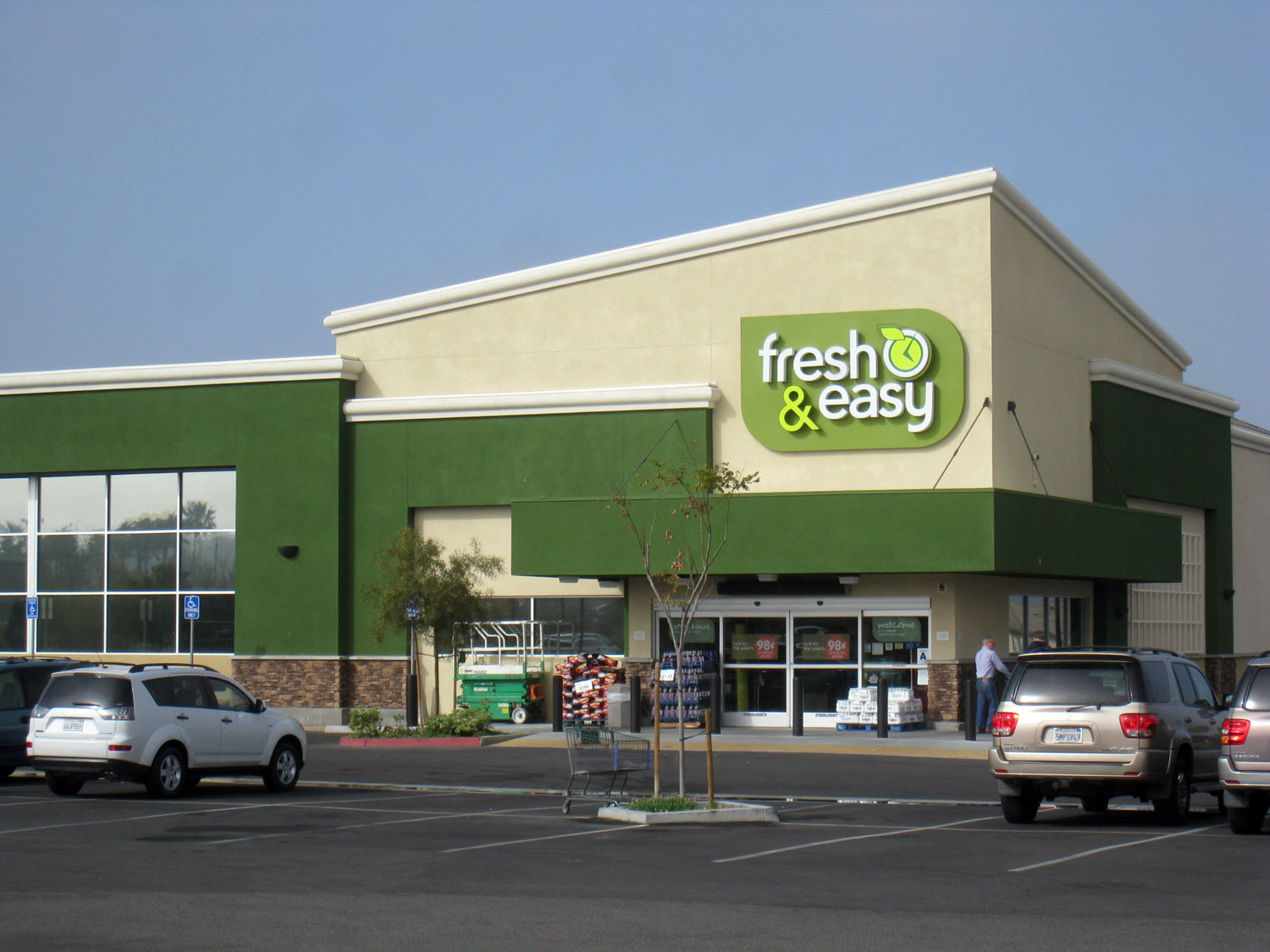
And so another defeat by the yanks. Tesco's venture into US food retailing has come a cropper and cost the company a good few billion. Indeed, just to close the business int he US will cost them £1.2 billion. New CEO Philip Clarke has clearly had enough of the airmiles for this stuff as he has decided to sell underperfoming businesses in Japan and slow the growth in China too.
UK companies never make it in the US, the scale and level of competition is high and understanding such a complex market takes a lot of energy, effort and luck. Tesco had not enough of any of these. Although there is a nice meme here that Tesco tried to sell fresh food to areas of cities that were undeserved and failed, similarly Jamie Oliver (once of Sainsbury's) tried to repeat his school meals schtick in California and got nowhere with it.
Perhaps the people there are not interested in polenta-based food choices?
Not only this but the US is the home of Walmart and it was quite ambitious to think it could be challenged in its home territory. Let's consider the reverse, how has Walmart done in the UK, it bought ASDA, but how much market share has ASDA grabbed since it was bought - not much really, not even as much as Morrisons.
I wonder which will be the next UK company to try and conquer America - maybe it is M&S's turn again...
Friday, 3 July 2009
Tesco begged to shaft taxpayers by Brown
 I know this story, Tesco to buy Northern Rock, has been floating about for a few days, but I had not had enough time to get round to addressing it.
Effectively, the Government wants to sell a bank in order to prove that it can actually sell all the other banks it has bought on our behalf.
Only, it can't sell Northern Wreck, because it is still losing money hand over fist. Another £500 million this year. On top of the £3 billion taxpayers have already contributed.
Oh, and Tesco only want the deposits and the performing loans. And the offer is £1 billion.
So let's do some very back of envelope maths (this is the type most used in the treasury according to my sources):
Taxpayers - £3 billion in, plus holding £60 billion of loans sat with a 5% default rate. So add another £3 billion to that. Plus the extra £500 million loss this year. Plus £8.75 billion loan still outstanding, but expected to be paid back, without interest.
Total: £6.5 billion expected loss, on current liabilities of circa £70 billion.
Sale price to Tesco to cover losses: £1 billion.
Brilliant, ain't it?
Tuesday, 21 April 2009

Marks and Spendless a post from back in January about the merits of high vs low end retailers, predicted a further collapse in higher end retailers and difficulties for all except the discounters.
Not everyone agreed. There was a minor disagreement with Anon over who would perform best. Anon commented "How does any of that explain Waitrose's success? And although Tesco are yet to announce their figures they are rumoured to be "disappointing". Aldi and Lidl's growth is static in their established branches and their growth is purely fueled by their expansion. I expect we'll find that Morrisons appear to have succesfully overperformed at Christmas for the second year running."
Ending in my comment;
"But lets not get into a war over it. You put your money into M+S and John Lewis group, Debenhams and Next and I'll put mine into New Look, Primark, Poundland and Asda, and whoever has 2 out of 4 showing a profit by 3rd quarter can claim victory."
Well, I call Primark early. Like-for-like sales, which exclude new openings, increased 5% in the six months to 28 February. Half year profits up 10%. That's on top of the 20% they were up the year before. The margin has taken a hit, but they have finished a new distribution centre that will only make a slick organistation even slicker. Peacock's, another discount fashion retailer reported 8.3% up like-for-like sales earlier this month.
Contrast with Next Plc retail like for likes were down - 6.5% to March.
In a downturn, pick the discounters. They retain their existing customers and pull more from above. Primark's gain is Next's loss.
And need we mention Tesco again? Or have their PR people opened enough champagne for all the positive free publicity they have had today.
Ps the Marks and Spendless post is worth a look if for nothing else but the picture of the model in the M+S bridal lingerie. Grrrr.
Subscribe to:
Posts (Atom)