This phrase was all the rage 10 years ago.
The banks had lent money that the borrowers could not pay back, if they foreclosed on all the bad loans, the banks themselves would go bust. So they extended the loans, accepted lower payments and generally waited where they could for companies to come back to health and be able to pay back their debts.
In the round it worked, of course RBS and others also took plenty to the cleaners to help them 'stay afloat', but many of the larger loans and groups were spared. As an example, the housebuilders were in real trouble. Taylor Wimpey's share price went as low as 5p! But the banks knew if they disrupted the house builders then the knock on to the rest of the industry would be unimaginable. Taylor Wimpey had its loans rolled over and recovered fully (in a sense, Wimpey was never in danger, its sales fell a bit, the issue was the lack of credit, not its business model or operations). This was a signal for the banks to 'extend and pretend' that whole sector.
Of course, over time the loans that could not be paid were called in, but we ended up for many years with a zombie economy of companies who could not pay their debts nor die off. This was a sub-optimal outcome, exacerbated by the over use of quantitative easing.
In other countries, things have gone less well. Deutsche Bank still has stuck to extending all loans and not clearing up its loan book, even today, 11 years after the crisis, the bank is a mess and the German Government is trying to figure out ways to get it to merge or other ways to keep it going. There are regular management changes as no one can figure out how to cure the illness with out killing the patient.
The above story has a alternate explanation for not postponing article 50 in the current UK Brexit mess. Postponing Article 50 is the political equivalent of Extend and Pretend, but the UK is Deutsche Bank not the UK or US banks. Extending won't fix anything at all, but continue to paralysis and stasis of the situation today. Whatever the idiots in Parliament decide to do, they need to make a decision as can-kicking now is the worst answer of all of them.

Showing posts with label Banking. Show all posts
Showing posts with label Banking. Show all posts
Friday, 25 January 2019


Tuesday, 8 August 2017
Rights and respobsibilites - online fraud and the security war
Quite interesting, and I dare say, courageous, for the CEO of RBS to come out today and complain about his own customers.
I may be being a little partial, but he basically says they are stupid, fall for obvious scams and as such should not be recompensed.
It is very hard to have much sympathy for RBS - after all, they managed to blow, er, £48 billion on stupid scams and lending which then then asked the taxpayer to bail out with no hope of ever seeing the money again.
So RBS do not start from a good place to preach. However, it is a growing scandal as to how much banks spend on compensating customers for online fraud, well over £1 billion a year in the UK.
There is a balance to be struck, no one wants to have to remember several passwords and use two or three key input devices in order to access their online accounts; on the other hand, the light touch access is easily hacked.
Online crime must surely be the fastest growing type of crime in the world alongside people trafficking in 2017.
So where does the line lie? It can't be right that people hand over their details to strangers or transfer money to strangers and the bank picks up the tab every time. There is a level of responsibility. On the other hand, people get conned, part the job of the bank is to stop this happening to their valued customers.
It is hard, just last week I was called by a guy who was referencing people I knew, telling me about his company and project and then subtlety asking for some key details from myself. It was a very high level scam (called Spear Phishing apparently) where quite some effort had gone into researching my background and contacts ( I would guess through linked-in). Only some tough questioning on my part made them hang-up the phone. The scammers are getting better and better and the Banks must be really worried about how they can keep up in the security war.
I am still not convinced blaming the customers is the answer, but it shows how worried the Banks are.
I may be being a little partial, but he basically says they are stupid, fall for obvious scams and as such should not be recompensed.
It is very hard to have much sympathy for RBS - after all, they managed to blow, er, £48 billion on stupid scams and lending which then then asked the taxpayer to bail out with no hope of ever seeing the money again.
So RBS do not start from a good place to preach. However, it is a growing scandal as to how much banks spend on compensating customers for online fraud, well over £1 billion a year in the UK.
There is a balance to be struck, no one wants to have to remember several passwords and use two or three key input devices in order to access their online accounts; on the other hand, the light touch access is easily hacked.
Online crime must surely be the fastest growing type of crime in the world alongside people trafficking in 2017.
So where does the line lie? It can't be right that people hand over their details to strangers or transfer money to strangers and the bank picks up the tab every time. There is a level of responsibility. On the other hand, people get conned, part the job of the bank is to stop this happening to their valued customers.
It is hard, just last week I was called by a guy who was referencing people I knew, telling me about his company and project and then subtlety asking for some key details from myself. It was a very high level scam (called Spear Phishing apparently) where quite some effort had gone into researching my background and contacts ( I would guess through linked-in). Only some tough questioning on my part made them hang-up the phone. The scammers are getting better and better and the Banks must be really worried about how they can keep up in the security war.
I am still not convinced blaming the customers is the answer, but it shows how worried the Banks are.
Wednesday, 22 February 2017
That Exodus from the City to Europe
As we tremble in our boots at the prospect of all those City firms upping and offing, the runners and riders for the Wannabe European 'Capital' City stakes are bimbling around somewhere near the starting line, bumping into each other, in the mud. It looks like heavy going.
And here is what the tip-sheet says:
Already on the map, really - for a nice bit of tourism. Good luck with the global finance.
ND
PS, to be fair, that Grauniad article also gives a list of good reasons why it ain't gonna happen. And they didn't even mention Civil Code and FTT.
PPS, the other day I watched Luxembourg's promotional video clip. You know the way that in TV ads for BUPA private hospitals, the word CLEAN swims in and out of the picture, subliminal-message-wise? Well for Luxembourg, the subliminal onscreen message-word was SAFE ...
And here is what the tip-sheet says:
From Paris to Vilnius, Milan to Madrid and Frankfurt to Valletta, regulators, local authorities and sometimes national governments are clearing a path for the exodus many feel is coming ... or even Amsterdam ... Dublin is a serious contender ... Appealingly low-tax Luxembourg ... Milan is also making a pitch, particularly for technology and financial firms, with ambitious if probably unrealistic plans to turn the Expo 2015 space into a global tech hub. Small, user-friendly Valletta, in Malta, fancies some insurance business, while Lithuania’s Vilnius and Riga in Latvia, want a share of fintech and support activities. “We have the talent and we have the infrastructure,” said Latvia’s finance minister, Dana Reizniece-Ozola. “Everyone wants to put themselves on the map.”Jolly good stuff, chaps. Nice to see a united front. And we all certainly fancy a bit of business. By the way, I've been to Latvia, and Riga is very nice. If you like little old Hanseatic League towns. A bit like Lübeck. Or King's Lynn.
Already on the map, really - for a nice bit of tourism. Good luck with the global finance.
ND
PS, to be fair, that Grauniad article also gives a list of good reasons why it ain't gonna happen. And they didn't even mention Civil Code and FTT.
PPS, the other day I watched Luxembourg's promotional video clip. You know the way that in TV ads for BUPA private hospitals, the word CLEAN swims in and out of the picture, subliminal-message-wise? Well for Luxembourg, the subliminal onscreen message-word was SAFE ...
Thursday, 24 March 2016
Police think crime is your fault
The Met Police commissioner, a man whose stock is falling like a mining share on the FTSE, has mused that Banks should stop paying out people who are victims for fraud.
Apparently, it only encourages them to be reckless.
His reasoning is along the same lines that if you leave your car unlocked or a window on your house open, then you will be uninsured. But then again, is a girl fair game because she wears a short dress....this is a silly path to take the 'asking for it' legal defence.
The Banks themselves are not going to wear this either. Firstly, if they all act in concert then that is anti-competitive. Secondly, they are the ones pushing online and digital.
The world of online banking has long been insecure. The Banks have always paid no questions asked because if they don't then customers will insist on branches, chequebooks, cash etc; all very costly and the Banks are trying to dump this aspect of banking.
Paying out a few hundred million in fraud cases is pittance compared to sacking 50,000 people and closing hundreds of branches. Perhaps the Banks could do more to install anti-vires software etc at their cost and as an added benefit of current account banking; rather than useless insurance deals etc that they currently offer.
And of course, their world is ruined if the trust goes and then there is the cost of real security. Nobody loves 3-level security, indeed personally I find it easier to find a cash machine than try to log on to my supposedly accessible internet banking.
So the Met Police commissioner will take a bucket full on this and quite right as his real attempt is to get others to pay to do the Police job. After all, his union members want to sit in cars and patrol the streets, they are hardly equipped to go toe-to-toe with Anonymous style hackers; good luck with the re-training of the Force!
Apparently, it only encourages them to be reckless.
His reasoning is along the same lines that if you leave your car unlocked or a window on your house open, then you will be uninsured. But then again, is a girl fair game because she wears a short dress....this is a silly path to take the 'asking for it' legal defence.
The Banks themselves are not going to wear this either. Firstly, if they all act in concert then that is anti-competitive. Secondly, they are the ones pushing online and digital.
The world of online banking has long been insecure. The Banks have always paid no questions asked because if they don't then customers will insist on branches, chequebooks, cash etc; all very costly and the Banks are trying to dump this aspect of banking.
Paying out a few hundred million in fraud cases is pittance compared to sacking 50,000 people and closing hundreds of branches. Perhaps the Banks could do more to install anti-vires software etc at their cost and as an added benefit of current account banking; rather than useless insurance deals etc that they currently offer.
And of course, their world is ruined if the trust goes and then there is the cost of real security. Nobody loves 3-level security, indeed personally I find it easier to find a cash machine than try to log on to my supposedly accessible internet banking.
So the Met Police commissioner will take a bucket full on this and quite right as his real attempt is to get others to pay to do the Police job. After all, his union members want to sit in cars and patrol the streets, they are hardly equipped to go toe-to-toe with Anonymous style hackers; good luck with the re-training of the Force!
Thursday, 24 July 2014
Trouble at Tesco, & RBS
Enough of the international scene: back to business. The Tesco crisis seems to have come to a head - well, the head has been chopped off, anyway. Mr Q will have a better-informed view, but as a simple punter I'm bemused.
 The bottom line is the bottom line, of course, but as I go about my shopping Tesco doesn't seem to have screwed up visibly (unlike, say, M&S clothing). In fact, I'd say my local 'superstore' has been steadily upgraded year on year, prices are OK, and if you are in a position to optimise the various promotions they run (particularly by buying in bulk and playing tunes on the petrol points) there is quite a lot of £££ to be saved.
I also thought that they'd responded intelligently to the recession with their phoney 'discount brands'. But no, it seems not, and Aldi & Lidl have done for them. Old man Cohen would never have let that happen: but since the days of MacLaurin they have been resolutely pushing the brand away from the bargain basement. To have been caught in a pincer from below (the Germans), and from above (M&S Foods and Waitrose) is a strange outcome.
The new man ('Drastic Dave' Lewis - sounds promising) comes from Unilever. By a curious coincidence I happen to know a bit about the energy purchasing operations of that company and of Tesco, and have been moderately impressed by both. This may have nothing to do with the issue at hand but it's a data-point.
With an operation and asset-base as big as Tesco there is huge scope for turning things around: (they could start by selling land). Sainsbury was languishing for years, but was never a lost cause and has engineered an up-cycle. Surely Tesco will eventually figure out a formula for the 21st century.
Which is more than can be said for the recidivists at RBS. Yesterday in the comments, Hovis brought our attention to this, the latest episode in what appears to be a disgraceful story we looked at back in February. Were RBS putting the squeeze on SME customers in order to drive the into the hands of their investment arm at knock-down prices ? It doesn't help their case when senior management is caught being economical with the truth.
As with Lloyds, the taxpayer-owner of these wretched institutions can only marvel that, across all the years we have owned the turkeys no-one from Whitehall has taken the management to the back of the bike sheds and marked their cards for them.
ND
The bottom line is the bottom line, of course, but as I go about my shopping Tesco doesn't seem to have screwed up visibly (unlike, say, M&S clothing). In fact, I'd say my local 'superstore' has been steadily upgraded year on year, prices are OK, and if you are in a position to optimise the various promotions they run (particularly by buying in bulk and playing tunes on the petrol points) there is quite a lot of £££ to be saved.I also thought that they'd responded intelligently to the recession with their phoney 'discount brands'. But no, it seems not, and Aldi & Lidl have done for them. Old man Cohen would never have let that happen: but since the days of MacLaurin they have been resolutely pushing the brand away from the bargain basement. To have been caught in a pincer from below (the Germans), and from above (M&S Foods and Waitrose) is a strange outcome.
The new man ('Drastic Dave' Lewis - sounds promising) comes from Unilever. By a curious coincidence I happen to know a bit about the energy purchasing operations of that company and of Tesco, and have been moderately impressed by both. This may have nothing to do with the issue at hand but it's a data-point.
With an operation and asset-base as big as Tesco there is huge scope for turning things around: (they could start by selling land). Sainsbury was languishing for years, but was never a lost cause and has engineered an up-cycle. Surely Tesco will eventually figure out a formula for the 21st century.
Which is more than can be said for the recidivists at RBS. Yesterday in the comments, Hovis brought our attention to this, the latest episode in what appears to be a disgraceful story we looked at back in February. Were RBS putting the squeeze on SME customers in order to drive the into the hands of their investment arm at knock-down prices ? It doesn't help their case when senior management is caught being economical with the truth.
As with Lloyds, the taxpayer-owner of these wretched institutions can only marvel that, across all the years we have owned the turkeys no-one from Whitehall has taken the management to the back of the bike sheds and marked their cards for them.
ND
Tuesday, 6 May 2014
The end of investment Banking in London?
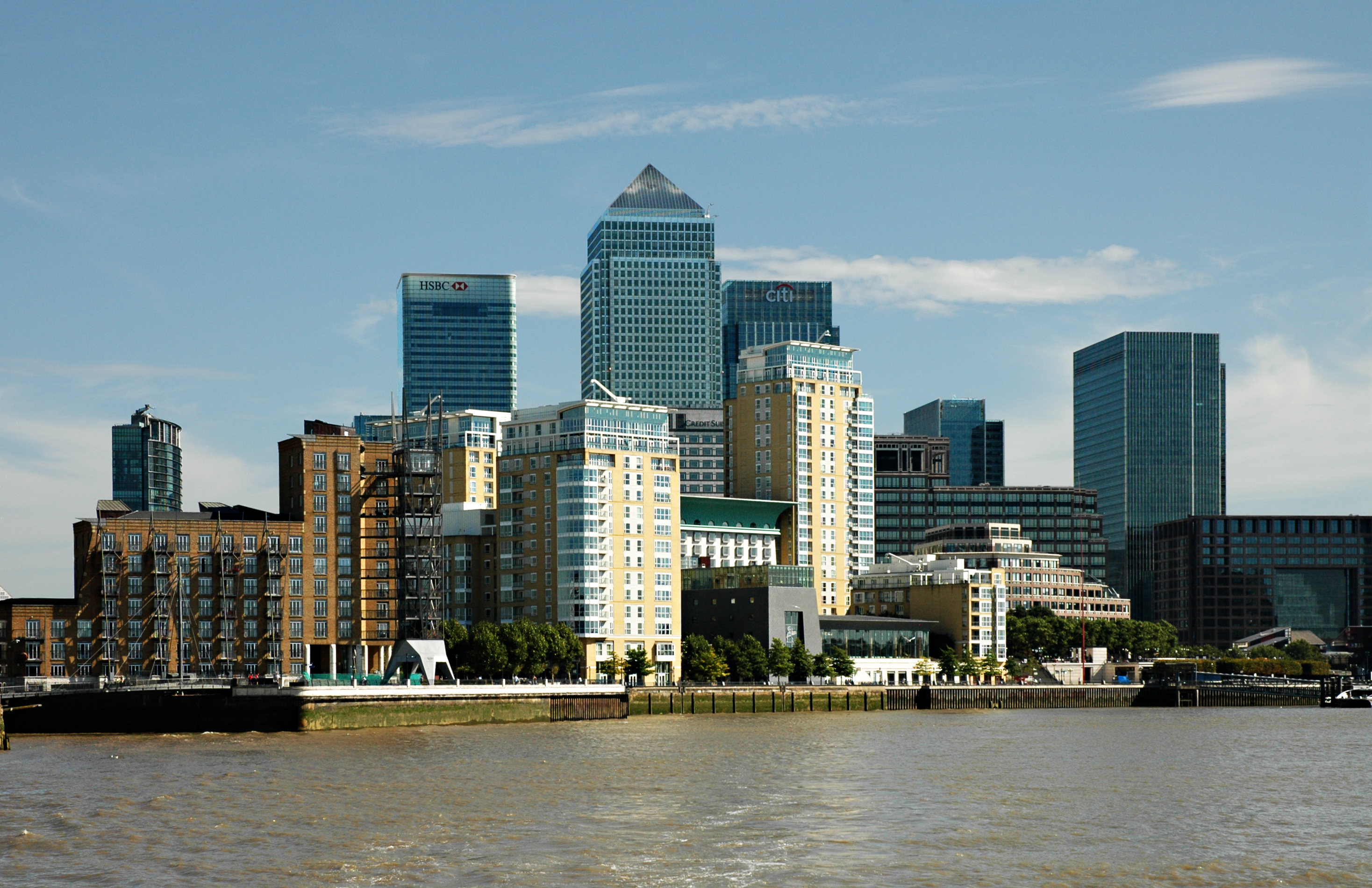
The City was a great centre for Investment banking, bigger than New York and far above the weight of any other European city.
Of course, we had our key supporting areas such as law, currency trading and accountancy which provided a good net to support the industry, but nonetheless the rise was large from the 1980's - US Bulge Bracket banks has often bigger offices in London than in New York.
Arguably, the height came in 2009, when Barclays bought the investment banking unit of Lehman Brothers in New York.
How the tables have turned, not just on the British banks, but on Investment Banking in general and particularly in London. Barclays is in a mess, today it announced more disappointing profits at its investment bank. The US CEo, Skip McGee has left and there is talk of a culture war within the Bank. I don't pretend to understand the details, but as an outside it would seem sensible to sell the unit rather than close it down, with all the associated costs, piecemeal.
This after all, is what RBS has done, slowly closing its investment bank. It would have been better to sell it for a £1 a few year ago.
Lloyds Bank has long ago relieved itself of any Equity Capital Market business.
Only HSBC remains in the market of the UK banks. Even in the City, the news is worse. Credit Suisse and UBS have both massively scaled down their Investment banking to focus on their Private Client business.
The US banks too, mindful of the London Whale scandal and also US Regulation, have scaled down in the UK.
So, in effect I would guesstimate that something approaching 50% of frontline roles are no more. many have been replaced with people in compliance or legal, but in terms of generating business this is not the same thing at all.
Of course, many people will just assume this is a good thing - less 'Casino' Banking. They are wrong for the most part. The Casino lives, in Bermuda funds, in direct advice to foreign sovereign entities, in boutiques. The sad news is that this is fine for the generation of bankers who have the contacts already. There is no ladder for the next generation.
Instead the next generation will be in Singapore, Shanghai, Dubai, Hong Kong, New York and maybe London too.
This, over time, will have a big knock on to the professional services business and other UK businesses. We may have a better balanced economy, but sub-prime was not an issue for UK lending really was it? We have killed the goose that laid the eggs. It will be sometime yet before this is apparent but we have done so nonetheless.
I am not saying we will not find a new goose, but at the moment that seems to be a property bubble, as it has been many times in the past and we all know this leads to a cyclical boom and bust that does little good in the long-run and much ill.
Tuesday, 29 October 2013
Will they, won't they split RBS?

The latest project to come up is what to do with RBS. Lloyds has been set forth on the road to full privitisation with a sucessful sale of shares the other month. Next year will see the Government holding whittled down to next to nothing, in plenty of time for the election, natch.
RBS presents a more worrisome challenge. The banks historic incompetencie's are vast, with a huge array of mis-selling, rigging and general lending splurge having laid waste to both its management and balance sheet. Stephen Hester did a good job of steering the bank away from the brink and now new management has the job of building for the future. The bank though is still brought low by its bad debts - a sterling job has been done to sell its non-core assets down from £350 million to more like £80 million, but the buffer that was trading profit that allowed it to balance profits and losses (well, sort of, RBS has been the least profitable of the big banks by far since 2008) has been closed down. This leaves a steadier income stream from corporate and SME banking, but a less profitable future.
So clever Mergers and Acquisitions advisors at Blackrock have been telling the Government to split the bank to make the good part easier to put back into the private sector. meanwhile the bad part can sit on government books just like Northern Wreck and slowly lose taxpayers money into the distant future. The split and sale has a positive outcome for those wishing to see deal activity and also for a stock market which likes nice easy bets, like the Royal Mail.
Also a thorny issue for the Government though is that the most under-performing part of RBS is its Ulster Bank - a part of the UK which needs help and does not need a banking crisis of sudden call in of credit lines. This issue is the main one which has driven the Government side of the need to split the bank.
From the bank side a split would be disastrous, the need to split out employees, systems and balance sheet is a hard job. So hard that Santander got bored of waiting to acquire a mere 5% of the bank and walked away from its deal to buy Williams and Glynn after 18 months. To inflict another large change on the bank would surely cripple its market focus and suck in all resources for another 2 years.
So a lot depends on the results on Friday, which should be announced with the decision about whether to make a split into a bad bank. If things have continued to turn around, perhaps the Government will leave it be, with a fig leaf of a faster closure of the investment bank or an 'internal' split of the bank, pushing its restructuring and Non Core units together. if things have nor progressed, then the dealmakers will have their day and RBS will be consigned to the same bin as Northern Rock, having turned our only to have managed to have its suspended for 5 years and then imposed after all.
Tuesday, 30 April 2013
Lloyds turning the banking tanker

It takes 10 years to recover from such Financial Crashes and we are only 5/6 years in, so plenty of 0% growth success stories will run.
Having said that it is quite encouraging to see Lloyds Bank return to profit today, even better is the underlying reasons; primarily they are managing to wind down their bad debt book at a good pace which means they can find buyers at above pure firesale prices. Secondly their core commercial and retail business remains strong and finally their costs cutting is reducing costs much faster than any losses can be piled up.
On the downside of the cost cutting is lots and lots of lost jobs, tens of thousands; generally though you could hear a pin drop in sympathy with the loss of lots of Banking jobs. Lloyds was never a big casino bank though and was pretty spread out across the Country to these losses are a shame, if necessary. I note too far less outsourcing by this bank (and RBS) to India and the Far East now that they are state owned.
Given Barclays and now Lloyds are in much better shape it only really leaves RBS holding us up.
Recover in the banking sector is a key step, of course the recovery has come due to the fact they won't lend any more on anything like reasonable terms, but you can't build Rome in a day
Sunday, 20 January 2013
RBS: the faliure of Vickers already evident

RBS though are using this as yet another chance to re-structure what is left of the investment banking division. The CEO is going to go and maybe one of the deputies too. The remnants of the investment banking division are going ot be split into a pure trading desk for Bonds and Derivatives and a Debt Capital Markets business that will support its more corporate businesses.
Apparently the FSA and some of its own directors think there is still room for considerable reduction in the Investment Banking scale of the bank. There is nothing wrong with this idea per se, but what exactly is this doing to drive shareholder return? It is keeping the regulators happy, but the GBM division has made £10 billion in profits since 2008. Not any more, as the business is radically scaled back.
What has this to do with the Vickers Report? Well the guidance form the report is to split banks in theory but not in practice. Investment Banking has been given extra risk weighting and the retail banking is ring-fenced to protect taxpayers.
So now we have this. IN stead of RBS selling its investment bank and there being separate units, we have investment banking scaled back and nearly killed off - but not allowed to be set free to see if it can work independently or not.
This is going to be the same story at Barclays soon. It is the worst solution, splitting the banks would have been easier, safer and probably delivered better economic returns.
Thursday, 22 November 2012
Banking reform in deep crisis

Clearly there was a need after the disastrous credit build up of 2001-2008 to make some big changes to Central Bank policy making, Government Policy making and private bank regulations. All of which when you think about it was going to be messy as so much needed to be done so quickly.
As ever, the US come up with the simplest ideas - in this case the Volcker rule - to try and fix things quickly. And of course the UK, beladen with all-knowing bureaucrats, goes for the complex route.
So we ended up with the unhelpful Vickers report which did somethings but did not split the Investment and Retail banks up which would have made everything alot simpler.
Worse is Basel III and the meddling FSA. The latter is not helped by the Governments refusal to put the detailed meat on the Vickers bones - so they are left not sure what guidance to issue. Basel III meanwhile stipulate capital increases fro banks to allocate against products.
You may or may not have noticed that this has ended Investment banking as was. There are many markets that simply are not economic anymore - the amounts of capital allocated is too great to mean returns. As such only advisory businesses work and fixed income and equities, as well as come trading has simply been stopped. Hence the tens of thousands of redundancies in the City - RBS, UBS, Credit Suisse, Citi are all making five figure redundancies at the moment. Yet to come, but baked in now, will be the loss of support jobs in Legal and Accounting firms.
Bank don't know what products are going to work in such an environment of regulatory flux, as their staff are expensive they are sacking them. In a year or two perhaps they will figure out what to do and hire some back. Those who are left are on salary packages often a quarter of what they once were.
This is going to have a big impact on the UK economy - so big that it will delay any meaningful growth until after 2015. And it didn't need to happen - its the impact of bureaucratic imposition on the regulatory reform process.
Of course, no one will care and I expect many comments saying hooray or so what, because Bankers are not popular. They are very popular in the Treasury though - watch those corporate tax receipts fall and a big drop income taxes as bonus's go.
Tuesday, 12 April 2011
Will you buy the Lloyds IPO?
No element of surprise for the market or their shareholders and the shareprice has been relatively steady since the announcement.
The real issue, which Lloyds have hinted at, is that with say 1000 branches for sale it is a big deal to buy them. RBS has sold 326 to Santander for £1.8 billion, so treble that and you have a deal of £5.4 billion.
Are the new entrant banks like Virgin Money or NBNK really going to find that kind of money - I think not. Even Private Equity houses are going to be hard pushed to raise those kind of funds in this market, especially as retail banking will get harder in the years ahead. Also there are huge back offices issues as these banks need a really strong IT platform that Lloyds is not going to give away with it. Plus of course there are other ancillary services like Insurance and Asset Finance that are not going with the branches.
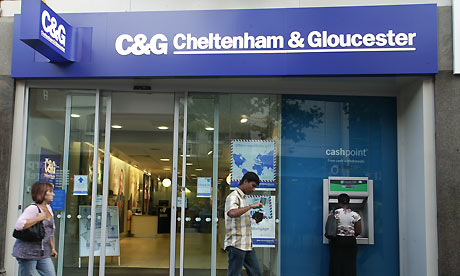
All in all, a challenging pill, which means perhaps the most likely option will be a floatation of the business - a re-birth of HBOS, although no doubt they will choose another name for it from their stable of brands, probably Cheltenham and Gloucester.
What is ironic is that if Lloyds had shut more branches as it was originally planning to do then it would not have so many, would have less perceived market share and thus would escape having to do this deal.
As for buying into the IPO, as always it would depend on the price, but retail bankign is goign to be a heavily regulated area in the future, with mroe competition - it's not facebook is it?
Wednesday, 13 October 2010
More Bank capital raising

This in turn has caused a fall in the shareprice of Barclays Bank - rumours in the City suggest that Mr Diamond's toy needs about £8 billion to meet the Basle III requirements.
Lloyds has a pretty bullet proof balance sheet and RBS, well RBS does not really but then is a state entity. What becomes of the bank if it needs to raise new capital is very bad news for shareholders, already down to only 17% ownership.
making banks safer by forcing them hold more money is a good thing; extra good is that it seems the capital markets are now strong enough to digest a new funding round. It is a very good sign of a turn in the Credit Crunch that markets can do this...if only they could do it without Government intervention at all.
Thursday, 9 September 2010
Barclays and a Loud Echo of Enron

 The elevation of Bob Diamond to CEO at Barclays is strongly reminiscent of my old mucker Jeff Skilling's rise to the top at Enron.
Skilling had been brought on board to develop his revolutionary concept of building what became known as an 'energy merchant' trading-and-origination function atop the pedestrian gas pipeline business that was Enron's original and core activity. (This was at a time when there were financial text-books stating that natural gas was a paradigm-case of a commodity that couldn't be traded.)
Starting as Enron Gas Marketing in the late '80s with the introduction of clever new financial products and derivatives in US gas, he moved on to electricity, the UK and Europe as Enron Capital & Trade Resources in the mid '90s. Despite every vested interest and incumbent utility's hand being turned against him, ECTR rapidly became the engine of growth for Enron, (not to mention the pioneer for worldwide gas and electricity liberalisation) leaving the staid gas pipelines trailing in its wake - truly, a capitalist @ work.

The parallels with retail and investment banking are clear enough: massive and innovative proprietary trading underpinned by a balance-sheet rich in dull, under-performing, but very real assets. Let's hope it doesn't all end the same way ...
ND
Tuesday, 21 October 2008
Lehman's Bomb Disposed?

Here is a link to the latest news re the Lehman's CDS close today. Perhaps after all there is to be no explosion? I did see this as well today though.
If tomorrow, when the dollar amounts are announced by the various parties involved, reveal no major losses (a small Hedgie should not be too much to worry about if it comes to it!), then this is a great crisis passed.
CDS may yet come to haunt the world at a later date if other big institutions go down, but for the moment this might be another sign that the credit crisis is past its worst point. LIBOR is coming down, money markets are opening up...what was that phrase? 'The green shoots of recovery.'
Now only a serious recession to get through and years of paying back the debt from the bail-out. In my wildest imagination I wonder if the scale of the bail-out would still be needed if less heed was paid to CDS rates. Traders looking at these were one of the main causes of the huge share price falls.
However, now the socialists have their hands on the throat of capitalism, they are not about to let go...
Thursday, 18 September 2008
GOLDMANS SAVED...and the world too.
 Not often we beat the BBC and UK media to a story...
This is THE news of the week, year, maybe even decade. A solution to the credit crisis by long-term management of debt by the US Federal Reserve and others.
Basically, all crappy debt to be given to a pot, small sums paid off over the years =
smaller banks, but no liquidity crisis.
Dow up 617 points, expect a FTSE rally tomorrow.
BUT, the key part. Hank is ex Goldman Sachs. Goldmans will stay independent, unlike Bear Stearns, Merrill Lynch, Lehman Brothers and maybe even Morgan Stanley.
What a coincidence, eh?!
(CU is in NYC, see you next week)
HSBC Goldmans pair-up

There are many rumours out there today and they are interesting, but like speculating on Fabio Capello's team selection.
However if HSBC, serial failure at Investment banking, serial winner of global retail banking, takes over Goldman's it will be stunning.
Like Aston Villa thrashing Real Madrid. Quite an achievement.
With all the bad news re HBOS etc, there would actually be a good counter story.
Barclay's buying Lehmans, HSBC getting Goldman, LLoyds getting HBOS - half the UK banks becoming even bigger global behemoths - at the expense of the Yanks?
Who would have thought it - even if Financial Services has had its day in the Sun, it would be quite an achievement.
Tuesday, 29 July 2008
Insanity Alert: Government recommended to help Banks by Banker

The title is the summary of the treasury report into the housing market today.
James Crosby, ex-CEO of HBOS (presumably owner of lots of shares in the company) has done what was entirely predictable.
He has said that the failed Fannie Mae, Freddie Mac scheme (the failed US mortgage scheme that has likely just cost US taxpayers a sum not unadjacent to our entire national debt) would not suit the UK - Well done Dr. S. Holmes!
Then the report has gone on to say it is important that the UK government assist the banking industry in avoiding a property meltdown that will further affect their shareholders (i.e. Jim and his money) - only they said it was to protect first-time buyers, poor put upon dears of course.
What tosh - potential first-time buyers are in the purple at the moment, house prices falling, more choice of property, more rentals coming onto the market. Who wants to buy a house in this market mess?
Only the banks are really against a steep correction in house prices as to protect their wasting portfolios; And which bank is the most exposed to the UK mortgage market? Yup you guessed it, HBOS- yet 'the plan' is for our Government to step in and securitise the loans for them that the market will not do.
Utter stupidity - the market saying is 'trying to catch falling knives.' The idea is so bad that it is likely the Treasury team whom I fisked yesterday will run with it.
Subscribe to:
Posts (Atom)