
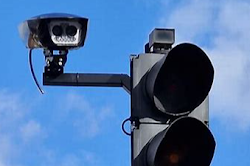
Under the weighty heading "Compliance Data" we have been given numbers for the first month, plus historical figures, supposedly for the purpose of demonstrating "improvements". Can they properly be compared? No, because the number of cameras deployed has been changing p- increasing - throughout, AND coverage by cameras in the extended zone was very patchy indeed in that first month. (Some boroughs have not been cooperating, which means TfL has been largely confined to installing cameras on "its" roads - the Red Routes - although these do, or ultimately will, provide quite a mesh for capturing vehicle movements of any distance within the full zone.) Maybe, perhaps some time in 2024, they'll have a fairly full network of functioning cameras. Even then, there are helpful online resources enabling the crafty driver to (attempt to) plot a route that avoids them.
Then there's the obvious issue that drivers' behaviours in the early weeks of a scheme aren't necessarily indicative of how things will be when it settles down.
TfL's own commentary cheerfully mashes up DVLA data relating to vehicles known to exist and be registered to a London address, with vehicles actually logged by the cameras.
Finally, there are as yet no data whatever on air quality which in principle is the purpose of the exercise.
Granted that much of this data shortfall will "improve" over time (in the statistical sense of more cameras in action, data collated from a longer period of the scheme's operation, and air quality data actually being provided), it still isn't clear we'll get solid conclusions on what ought to be the political issues arising. Partly that's because all the politicos involved are quite capable of cherry-picking data, not to mention abusing statistics and of course lying outright. But even if the data were turned over to the most objective statistical analysis, there are several fundamental problems, including:
- It is really obvious that the number of dirty old bangers on the road has anyway been decreasing steadily, for the simple treason that they fall off the perch eventually and are replaced, if at all, by inevitably newer, cleaner models. This has been going on inexorably for decades. Khan won't be able to prove what part, if any, of the "increase in compliant vehicles" is down to his ULEZ extension, as opposed to the steady march of technology, or indeed to people no longer being able to afford to drive - including firms going out of business. He may not even find a handy inflexion-point on the graphs to call in aid.
- Still less will he be able to conclude definitively on any changes in air quality that might be registered in due course. (a) Road vehicles are only one contributor to air pollution. Another very large contributor is the vast fleet of diesel engines associated with building sites: diggers, cranes, gennies, etc etc. According to Private Eye, Khan has resolutely refused to implement the latest European standards on building-site emissions, on the grounds that to do so might impact on London's economy (and he's probably right, at least at the margin). Plus, (b) the road network is constantly changing - indeed, Khan himself is having a new cross-Thames tunnel constructed, which is bound to result in increased traffic. Stick all that up yer exhaust pipe, Sadiq, and smoke it.
There are several possible desiderata in play**, that in an ideal world we might seek to audit. The easiest will be "number of compliant vehicles on the road". But that is at best a proxy for "air quality", and if the latter doesn't show a material improvement that can somehow legitimately be claimed by Khan's scheme, the former will be irrelevant. Which leads us to "value for money". Ah yes, VFM. Well, let me simply say that last month I scrapped a car, for which Khan kindly paid me £2,000. Which was around double its market value (or three times what Webuyanycar offered me). Me and tens of thousands of others. Thanks, Sadiq.
ND
____________
** Some will suspect that another desideratum is - more cameras surveying our streets ...

