Yes, the government is quite properly chuffed about this, as may we all be. Maybe it will work out, maybe it won't. Maybe it's a dumb use of large-scale batteries, which (I strongly suspect) could make even more money selling quick-reaction services directly to the grid. Who cares - ? because it's private money! People make and lose fortunes all the time with their brilliant / dumb ideas: it's what makes the world go around. C@W, see?Steve Shine OBE, Anesco’s Executive Chairman said: "For the solar industry, Clayhill is a landmark development and paves the way for a sustainable future, where subsidies are no longer needed or relied upon. Importantly, it proves that the Government’s decision to withdraw subsidies doesn’t have to signal the end of solar as a commercially viable technology."
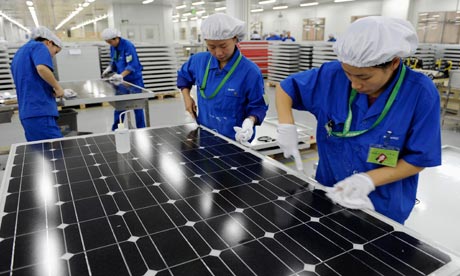
Rather dull photo: Anesco

The collapse in 'costs' of offshore windfarms since proper competition was introduced for access to those subsidy-pots is another good sign. They still want - and get - subsidies, though; and aren't made to contribute to the cost of balancing their intermittent output.
Of course, it's early days, and outrageous subsidies are still being paid to / on offer to: legacy projects; Hinkley Point; biomass-burning power stations that, disgracefully, actually increase emissions of CO2 vs even coal ... the list goes on. But hopefully the points are slowly being registered that (a) subsidies needn't be required; (b) subsidies can lead to grotesque unintended consequences, as well as unnecessary costs being heaped onto (in this case) electricity users; and (c) whatever scheme you are going to come up with, it will be better if you put it out to auction / competitive tender.
Not required? The subsidy lobby (which includes people who aren't even beneficiaries! - and who probably be most dismayed to meet the flinty-eyed subsidy-farming bastards they have helped to enrich) would argue that without the R&D and the 'new industries' helped into being by the first decade and more of crazy bungs for crazy schemes, we'd never have reached the happy position where this may soon no longer be needed. There is, of course, a soupçon of truth in this.
But (a) it could have been done better by (i) funding only the R&D and (ii) ensuring proper competitive conditions every step of the way.
And (b) it didn't need to be done by us! Let other coutries waste their money on the R&D - they won't fail to sell their stuff to us in due course. We know this, because that's exactly what they do right now.
If, of course, every penny spent in the last decade of British subsidies went to British universities, R&D shops, engineering firms and manufacturers on competitive terms, it might be seen in a more favourable Keynsian light. As we know, that is far from how things have been. And we're not done yet with this monstrous waste.
ND
_____________
** Everyone is saying "subsidy-free" but I wouldn't be surprised to learn there is actually some modest form of subvention going on here in one form or another. Cynic? Moi?