Monday, 9 January 2012

Hey Scotland, where's my vote?

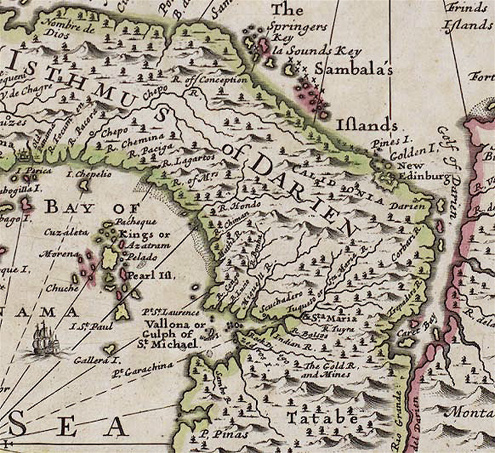
Always worth a quick glance back in history to see how things evolved. Back in the 18th Century Scotland had decided to get into the colonisation game and the King and Lords of the land had put up much money to sponsor adventures in the new world, to places such as Panama.

Unfortunately for them, these all failed and the vast costs and debt weighed heavily on the State. So much so that they really needed the help of their hated English brethren to get them out of a spot of bother. the end result of this mess was the Act of Union of 1707.

Today, there are moves by the SNP to have a vote for Scottish independence. but I ask, where is my vote as an English taxpayer? We saved Scotland 300 years ago and have continued to do so for the time since, including most recently when HBOS and RBS were the 2 main banks along with Northern Rock to bring down our financial system.

Instead, we are to be told that it is up to the Scots alone as to whether they want to remain part of the UK. As it happens I am quite in favour of them leaving. The cost of the Socialist state in the North more than offsets and oil and gas revenues and will also ensure a much more right-wing Country is left behind. As it would jeopardise our UN status and military standing I am quite keen too - for I don't see how the UK can afford to continue its current high spending ways in a world where we are dropping down the GDP tables at a precipitous rate. Scotland leaving the Union will force and honest conversation to be had by the remaining peoples of Great(ish) Britain.

Where is my vote though - it stakes two to tango after all. In the US secession was enough to kick off a very bloody civil war. Now of course I don't want that, but for an amicable split, as with marriage, it is best if all parties agree rather than one flounces off alone.

Why the unionists don't insist on this or at least use it as a bargaining chip is beyond me. The negotiating stance of the Government (and previous one) leaves a lot to be improved upon.

Saturday, 7 January 2012

Milliband attacks the economy, again

Here we are, early in 2012 and already the Labour party leader is attacking business and trying to destroy the economy. The sheer ignorance of business, rationality and capitalism is breathtaking.
In a weird article in the Graundiad Mr Milliband lays out his insane agenda. He wants more 'responsible capitalism' what this amounts to seems to be an attack on executive pay.

This is so short-sighted. Already the City itself has done a good job of undermining the public equity markets. IPO's like Ocado last year that are priced to fail and succeed only in making investment bankers and the proprietors rich are limiting the amount of companies coming to market. Huge market volatility is causing smaller AIM companies to delist at a very fast spreed. Volumes are falling - the Equity markets are shrinking.

Add to this a crazy idea about comparing pay and limit pay and wealth creators are going to ask why go public at all? With all the hassle and effort only to have your own pay limited anyway. Instead these companies will stay private where the Government cannot yet touch them. There is plenty of private equity money around today to fund private companies.

But this is terrible for our society. Pensions and Savers - who still outnumber debtors by some way, rely on public companies for their investments and yield. Private companies pay no dividends to retail or institutional investors. So by shrinking the markets we are reducing the potential for our savings to help fund our future and our investments and growth.

I am all for fixing the current mess in our financial system which as we all know is at crisis proportions - but having idiotic, populist, socialist politicians who have never had a job in their lives pontificate and lead the debate is a very sad state of affairs to be in. Let's hope the Coalition roasts them for this nonsense.

Thursday, 5 January 2012

Pentagon defence cuts.


80,000 US military personnel currently defend Europe as part of Nato.
That's a tiny proportion of their total numbers. About 5% of their manpower. So the announced large scale military cuts may come from some of the reserves in the USA itself. But some are bound to come from Europe.
American politicians have long complained of the cost of defending Europe. Why station those troops in Europe , at their own expense, so they can spend their cash propping up foreign economics that are to cheap to defend themselves?

Those troops were supposed to be home by 1948 at the latest. Except that the USSR just wouldn't let up and the western democracies were about to collapse from war debt and war damage. The 1990 end of communism should have allowed the US to get out but then the Balkans kicked off into civil war. It wasn't until 2004 that George Bush announced 70,000 personnel from Europe would go.

The USA {according to the BBC} had almost three times the Europe number in Iran/Iraq and just 50,000 in the far east. It makes a lot more sense for the US to deploy where the threat is.

The announcement of US troop reductions was a bit of a surprise. But it shouldn't be. Since the 1960's America has been telling its Euro allies to stump up some cash and defend themselves. UK and France do. The rest don't like to go much above 1-1.5% GDP. As recently as June during the Libyan involvement US defence secretary Robert Gates noted the allies are running short on bombs.

“The blunt reality is that there will be dwindling appetite and patience in the U.S. Congress — and in the American body politic writ large — to expend increasingly precious funds on behalf of nations that are apparently unwilling to devote the necessary resources or make the necessary changes to be serious and capable partners in their own defence,” Mr. Gates said. Some NATO nations are “apparently willing and eager for American taxpayers to assume the growing security burden left by reductions in European defence budgets.”

Europeans economies have long decided that American president's can't and won't cut military spending.
It's such a large part of the economy. And how weak would a President look to his opponent if he advocated military cuts? Those key industrial-military complex states would wipe him out. The only President to try was Carter. And look what happened to him.

But this IS the time to do it. And Obama is the President to do it. He has to make budget cuts. And there is plenty of fat in the defence budget to trim. It may look weak but his opponents are weak. US citizens are sick of war. Nearly two decades of military adventure haven't bought much glory. And even less stability. He can sell it as a time to stop intervention for no cause, for no gain. It actually puts the Republicans on the back foot. Obama can claim to have ended the wars they started and couldn't finish. And he can turn it to his own advantage even more if he cuts European defence spending.

Time magazine had a piece in April. How to save a trillion dollars. It suggested..
"While the U.S.’s military spending has jumped from $1,500 per capita in 1998 to $2,700 in 2008, its NATO allies have been spending $500 per person over the same span. As long as the U.S. is overspending on its defence, it lets its allies skimp on theirs and instead pour the savings into infrastructure, education and health care. So even as U.S. taxpayers fret about their health care costs, their tax dollars are paying for a military that is subsidizing the health care of their European allies."


Mr Gates again. "Do we really need 11 carrier strike groups for another 30 years when no other country has more than one?" And Time asks ..Do the Air Force, Navy and Marines really need $400 billion in new jet fighters when their fleets of F-15s, F-16s and F-18s will give them vast air superiority for years to come? Does the Navy need 50 attack submarines when America's main enemy hides in caves? Does the Army still need 80,000 troops in Europe 66 years after the defeat of Adolf Hitler?
If I was Obama I'd say yes to the submarines, maybe to the fighters, but definitely withdraw the troops from Europe.

RBS sale to mark the bottom of banking market?

More news out today on our taxpayer investment in RBS. What I can't believe is the timing of all this change. The story goes that in the Investment bank the foreign units are going along with all of Equities and Corporate Finance (a business called Hoare Govett). Now neither of these are the really big pieces of RBS Global Banking Markets - but without them RBS is left with a very sub-scale debt business that is only good in a few areas such as corporate bonds.

But really, selling now, in midst of the Euro crisis? RBS will be lucky to get any buyers at all, let alone a decent price for these units. So in the end it may well have to sack everyone and close them down. yet in the last 2 years these units have been profitable. of course in the Brown Boom this was the unit that blew the bank up with all its bad buys, but now these are more controlled. So instead now it seems we are to throw the baby out with the bathwater - for RBS is already selling down all of its Non Core assets quite successfully.

All I can see here is the split of a bank in the worst possible moment which will int he long-run hamper shareholder return  - which is rather crucial as the current share price of 20p is a long way off the 55p needed for the Government and ourselves to get out money back on the bailout.

Bizarre that this is being pushed now - there must be more to it? I have a feeling shedding the bankers with huge bonus' is clouding the issue here.

All in all though, Governments generally make the worst decisions with te worst market timing possible, see Gordon Brown's sale of the UK gold reserves. So perhaps this knifing of RBS will in time mark the nadir of Investment Banking in the current crisis.

Wednesday, 4 January 2012

Britain's credit crisis in 2012

This is a very worryisome article in the Telegraph. I have often wondered why of all potential advertisers to this sitte I get the most interest from credit card issuers and payday loans companies.

Yet it seems they have a bountiful supply of desperate customers. Really, if you need a loan because you money has run out before you even pay the rent (surely top of everyone's list of essentials along with food?) then your financial situation is in a very poor state. For a million people to have been estimated to have done this seems incredible; as a YouGov survery this is unlikley to be some sort of statistical anomaly.

This signals 4 things to me:

1 - We are a long way off a housing boom - house prices are going to fall for sometime yet.

2 - The sooner the Government reduces housing benefit and starts putting rental prices under more market pressure the better for everyone.

3 - The populace is ill-prepared for the second recession that is now be ing predicted for the first half of this year.

4 - Maybe I should look into Provident Financial as a useful counter-cyclical share to hold - them being the largest listed doorstep lender.