It's really hard to see how Greece can stay in the Eurozone and even the EU from here on in:
1. There is only around €500 million of cash in Greek banks and even with allowances of €60 euros per person that is only 1 days supply left.
2. The ECB is not a political unit and Draghi hates being seen as partisan so it will not do anything ahead of agreement by the EU leaders.
3. The EU leaders are not meeting until tomorrow - so good luck in Greece trying to live for at least 48 hours with no money.
4. The IMF loans are sub-ordinate to the EU ones and the Greeks have defaulted anyway.
Basically, by the middle of this week Greece will have no money left, let alone trying to pay €3.5 billion in a couple of weeks time to the EU.
So, even if the Euro leaders try hard - which initial reactions suggest they are not minded too anyway, the chances are that Greece will have to issue its own scrip sometime this week in order to keep any semblance of the economy going. Medicines and food are running low with the Banks shut - the Country maybe struggling but ordinary Greeks can afford to buy goods - it is the EU via the ECB that is creating an artificial shortage.
As I have maintained for years, the sooner they do this, bite the bullet of a hefty devaluation and get on with it the better - The Country will be a much better place in 3 years, versus the 7 years of disaster that have accompanied trying to pay the debts.
As for the Eurozone, ECB and all that - there is nothing positive to be said at all. The actions to create the crisis in Greece are sickening, the lack of vision and judgement to design an easy path to exit or a parallel 'soft euro' for Italy, Spain and Portugal too is pathetic. The UK can also see clearly where attempts to negotiate or change the will of Germany get you - nowhere and worse.
The sooner we can leave the better, when is that Referendum?
Showing posts with label ECB. Show all posts
Monday, 6 July 2015
Thursday, 5 February 2015
Who asked the ECB to kill Greece?
Why is the world so dominated by Central Banks?
It is a strange phenomenen that we live in the West in 'deomcracies' but virtually every country has a central bank. The key for all central banks is that they are private- they are not state owned nor even state managed. This is a legacy from their establishment by the Rothschilds and other wealthy families a couple of centuries ago when money was desperately needed to fight wars (these families never founded the banks, but they rather helpfully at the ime put up all the money!).
Countries with independent central banks are generally held to be more stable in the international political economy. The Banks act as a buffer against populist or crazed politicians.
However, this means they can also do things that are themselves risky and there is little oversight. The Federal Reserve in the US decided to expand its balance sheet by $5 trillion during the 2008/9 crisis - five times what Congress approved on the 'bailout' which was the main political discussion at the time.
Just today we can see the effects of central bank. Greece has been making conciliatory noises for the past week about debt restructuring and playing nicely with the EU and Germans, despite Syriza sweeping to power.
In London the new finance minister got a good reception, less good in Germany but they did hear him out. Yet today he has met with Mario Draghi at the European Central Bank. Things have not gone well, straight after the meeting the ECB has withdrawn the right to use Greek bonds as collateral for Greek Banks which has meant a 300% increase in their borrowing costs.
Clearly, Draghi is sending a message that the Greeks need to negotiate in good faith with the ECB and EU.
But who elected Draghi? Why should the ECB be allowed to take actions that are not sanctioned by the Euro nations?
Central banks, although independent are situated in a Country. It is hard to imagine the Bank of England really acting against the best interests of the UK economy - of course, we know it makes makes mistakes the whole time, but there is no intent here, just incompetence.
The ECB is a more dangerous institution, it is not beholden to anyone or anything and yet is the most powerful institution in the EU. How powerful and monomaniacal we will find out in the next few months as the new Greek debt crisis unfolds.
It is a strange phenomenen that we live in the West in 'deomcracies' but virtually every country has a central bank. The key for all central banks is that they are private- they are not state owned nor even state managed. This is a legacy from their establishment by the Rothschilds and other wealthy families a couple of centuries ago when money was desperately needed to fight wars (these families never founded the banks, but they rather helpfully at the ime put up all the money!).
Countries with independent central banks are generally held to be more stable in the international political economy. The Banks act as a buffer against populist or crazed politicians.
However, this means they can also do things that are themselves risky and there is little oversight. The Federal Reserve in the US decided to expand its balance sheet by $5 trillion during the 2008/9 crisis - five times what Congress approved on the 'bailout' which was the main political discussion at the time.
Just today we can see the effects of central bank. Greece has been making conciliatory noises for the past week about debt restructuring and playing nicely with the EU and Germans, despite Syriza sweeping to power.
In London the new finance minister got a good reception, less good in Germany but they did hear him out. Yet today he has met with Mario Draghi at the European Central Bank. Things have not gone well, straight after the meeting the ECB has withdrawn the right to use Greek bonds as collateral for Greek Banks which has meant a 300% increase in their borrowing costs.
Clearly, Draghi is sending a message that the Greeks need to negotiate in good faith with the ECB and EU.
But who elected Draghi? Why should the ECB be allowed to take actions that are not sanctioned by the Euro nations?
Central banks, although independent are situated in a Country. It is hard to imagine the Bank of England really acting against the best interests of the UK economy - of course, we know it makes makes mistakes the whole time, but there is no intent here, just incompetence.
The ECB is a more dangerous institution, it is not beholden to anyone or anything and yet is the most powerful institution in the EU. How powerful and monomaniacal we will find out in the next few months as the new Greek debt crisis unfolds.
Tuesday, 1 July 2014
Bulgaria's Bank seems peculiarly inexplicable
Interesting to see the coverage of this story. So last week the US is putting pressure on Bulgaria to stop investing in the South Stream pipeline which Russia wants to use to avoid Ukraine.
This weekend, there was a bank run on two Banks in Bulgaria. Whilst the Country is known for its endemic corruption, the economy has actually been pootling along OK with plenty of Euro subsidy for the locals to feast one - €2 billion a year is a lot of money to share around.
So why the bank run? Why two random arrests of men said to be starting it via text messages? With Bond's at 3.7% yields and a deficit lower than the UK's what was the problem?
One view is this is an oligarch spat which has got out of control, but this feels implausible on its own.
Nobody currently knows, but I would be very suspicious of their friends in Moscow having had a little say in this. It can;t be much fun being a broke pawn in the great power game!
Thursday, 5 June 2014
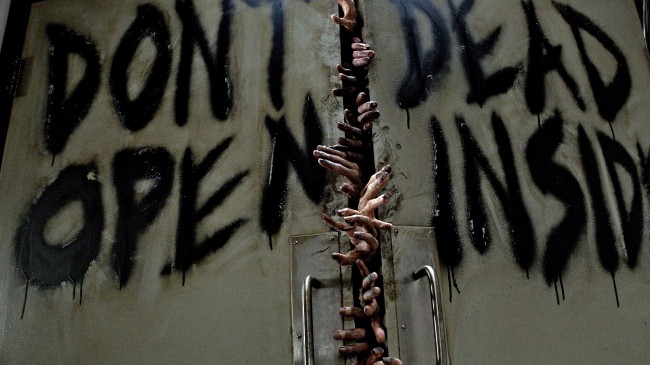
The European Economic Zombie Commuity
Zombies are all the rage these days, what with popular shows like 'The Walking Dead' - not my cup of tea as I am not keen on gore and horror, enough of that in the day job.
But the Eurozone economy is something else, after a sclerotic recovery that was barely, even in the Northern States, better than the UK's and hardly above inflation, all the main economic indicators are falling again. Business activity has slowed in May, Manufacturing output has slowed in May and inflation is also falling.
All the while there is QE in the background and record low interest rates. But today will see the European Central Bank cut from 0.25% to 0.1%. How this is supposed to make a difference is beyond me. Rates at that level are a signal not a tool.
The European banks are not lending and companies are not investing - as we can see from unemployment being at an 11.5% average across the Eurozone.
It really is a tale of woe and hard to see a way out when the economy is straightjacketed into the Euro. Spain, Italy and Greece desperately need a devaluation to write-off the debt and pain of recession and grow once more, albeit from a lower base - confidence is the name of the game and that is what the euro currency shreds. With markets so subdued even the German powerhouse is in trouble and a weakening China also means that Germany is not in the next 2-3 years going to lead some economic charge.
Of course in the UK we did not have the euro. A devaluation occurred, although that has now been made up in currency terms, QE was undertaken on a wide scale and the Bank of England pushed Funding for Lending and other such programmes to try and re-start the economic engine. It took a while but it seems to have been partially successful (the cancelling of austerity will be seen as the main failure in years to come).
The Euro crisis of 2011 seems like distant history now, but the reality of its malign influence is still with us and will be for years to come; The politicians of Europe have so much capital invested in the project that they will bankrupt the economy of the EZ before letting the Euro go. We maybe here sometime.
But the Eurozone economy is something else, after a sclerotic recovery that was barely, even in the Northern States, better than the UK's and hardly above inflation, all the main economic indicators are falling again. Business activity has slowed in May, Manufacturing output has slowed in May and inflation is also falling.
All the while there is QE in the background and record low interest rates. But today will see the European Central Bank cut from 0.25% to 0.1%. How this is supposed to make a difference is beyond me. Rates at that level are a signal not a tool.
The European banks are not lending and companies are not investing - as we can see from unemployment being at an 11.5% average across the Eurozone.
It really is a tale of woe and hard to see a way out when the economy is straightjacketed into the Euro. Spain, Italy and Greece desperately need a devaluation to write-off the debt and pain of recession and grow once more, albeit from a lower base - confidence is the name of the game and that is what the euro currency shreds. With markets so subdued even the German powerhouse is in trouble and a weakening China also means that Germany is not in the next 2-3 years going to lead some economic charge.
Of course in the UK we did not have the euro. A devaluation occurred, although that has now been made up in currency terms, QE was undertaken on a wide scale and the Bank of England pushed Funding for Lending and other such programmes to try and re-start the economic engine. It took a while but it seems to have been partially successful (the cancelling of austerity will be seen as the main failure in years to come).
The Euro crisis of 2011 seems like distant history now, but the reality of its malign influence is still with us and will be for years to come; The politicians of Europe have so much capital invested in the project that they will bankrupt the economy of the EZ before letting the Euro go. We maybe here sometime.
Friday, 27 July 2012
Mr Draghi, are you wearing any clothes?
Markets have recovered off the back of ECB President Mario Draghi saying he will do everything to defend the Euro.
The thing is:
1) The ECB can't do much more without further agreement from Germany
2) Germany is on holiday
3) The problems in Spain and Greece can only really be fixed by a massive devaluation via Quantitative Easing - Germany will not agree to this.
So..what exactly is Mr Draghi going to do - what is his bazooka in the modern finance parlance? It is not QE or use of the ESM monies to buy bonds because he is not allowed to do this.
perhaps it is more Bond buying, this in the medium term is nuts. The ECB is going to own all this peripheral debt when the balloon goes up and be seriously bust as a consequence. Who can bail out the ECB when it has already called on all the funds of the Eurozone?
I think this statement yesterday, as much as it rallied the markets, sounds like the last throw of the dice to buy some time over the summer. I wrote earlier this week that August will be critical, its still looking that way.
The thing is:
1) The ECB can't do much more without further agreement from Germany
2) Germany is on holiday
3) The problems in Spain and Greece can only really be fixed by a massive devaluation via Quantitative Easing - Germany will not agree to this.
So..what exactly is Mr Draghi going to do - what is his bazooka in the modern finance parlance? It is not QE or use of the ESM monies to buy bonds because he is not allowed to do this.
perhaps it is more Bond buying, this in the medium term is nuts. The ECB is going to own all this peripheral debt when the balloon goes up and be seriously bust as a consequence. Who can bail out the ECB when it has already called on all the funds of the Eurozone?
I think this statement yesterday, as much as it rallied the markets, sounds like the last throw of the dice to buy some time over the summer. I wrote earlier this week that August will be critical, its still looking that way.
Friday, 9 March 2012
Greek Denoument
Crisis Over.
In the end simple really, get the ECB to declare it can;t take any losses, agree there to be no restructuring of any Sovereign bonds and impose instead of this a 75% loss on £125 billion of private sector loans. Why should Government's face losses when their are private market players to mess with?
Hey presto, the Greeks are saved and can be lent money by the Eu to help them push austerity further onto their Country which has a currency 20% overvalued and youth unemployment at over 50%.
All is well, Merkozy have completed their work.
What can possibly go wrong now?
In the end simple really, get the ECB to declare it can;t take any losses, agree there to be no restructuring of any Sovereign bonds and impose instead of this a 75% loss on £125 billion of private sector loans. Why should Government's face losses when their are private market players to mess with?
Hey presto, the Greeks are saved and can be lent money by the Eu to help them push austerity further onto their Country which has a currency 20% overvalued and youth unemployment at over 50%.
All is well, Merkozy have completed their work.
What can possibly go wrong now?
Friday, 15 April 2011
Ireland's folly
Moody has today downgraded Ireland's debt to one notch above junk status. Given Ireland's debt is being almost entirely purchased by the ECB this means a lot of European taxpayers money is being flushed away.
I really don't understand what Ireland is doing (nor Greece, Portugal). They can't pay their debts and need to declare bankruptcy - or at least a 'restructuring' which is the national equivalent of a CVA.
I think Ireland is in a great position to do this now. All they have to do is call the Germans and say the game is up. The Germans will properly panic as it is THEIR banks (UK banks too, but they have written off big chunks this past year) which are most exposed by a long way. The Germans have been using EU funds to protect their own defunct banking system.
The whole pretence at the moment is incredible really. The debts are too great to pay back and the austerity only works in Countries like the UK where the levels of debt are sustainable. In Countries where the debts are too high then an outright default is necessary.
The sooner they get on with it the better. I have no idea why they continue to do otherwise. Then again, the Irish Government underwrote its entire banking system which has to be the worst decision made during the entire financial crisis across the whole world - and that is saying something.
I really don't understand what Ireland is doing (nor Greece, Portugal). They can't pay their debts and need to declare bankruptcy - or at least a 'restructuring' which is the national equivalent of a CVA.
I think Ireland is in a great position to do this now. All they have to do is call the Germans and say the game is up. The Germans will properly panic as it is THEIR banks (UK banks too, but they have written off big chunks this past year) which are most exposed by a long way. The Germans have been using EU funds to protect their own defunct banking system.
The whole pretence at the moment is incredible really. The debts are too great to pay back and the austerity only works in Countries like the UK where the levels of debt are sustainable. In Countries where the debts are too high then an outright default is necessary.
The sooner they get on with it the better. I have no idea why they continue to do otherwise. Then again, the Irish Government underwrote its entire banking system which has to be the worst decision made during the entire financial crisis across the whole world - and that is saying something.
Subscribe to:
Posts (Atom)