Friday, 10 November 2023

AEP - manic religious enthusiasm for wind power

Several folks around here cite Evans Pritchard from time to time, noting that some of his stuff is excellent and some is bonkers.  His latest on the wonders of (offshore) windfarms is firmly in the latter character, being in the nature of an outpouring of religious fervour.  How else can we explain this? 

Barry Norris from Argonaut Capital disagrees [with AEP's uncritical enthusiasm], calling wind “an unsustainable economic rent seeking parasitical industry”. Rent seeking, certainly. But unsustainable?  The cost of running a gas power plant this autumn (around £84 MWh) is still almost double the average tariff paid to wind companies under recent CfD contracts (£46 MWh).  It was nine times more during the gas panic last year.  The Treasury pockets the difference.  It is a reverse subsidy.  Home-harvested wind also slows the leakage of our national wealth through the current account deficit.  Mr Norris doubts that wind companies will be able to meet commitments agreed in their CfD contracts, and will require a renegotiation.  I agree.  The strike price will have to rise in the new unforeseen circumstances.  He expects a ”shabby bail-out”: I call it a reduction in the wind tax paid to the Treasury.

Oh dear.  Aside from the entirely dishonest use of the "9 times" statistic (as coined by Ed Miliband, oft-parroted by greens, and true for just a couple of days last autumn): why will higher-than-expected gas prices require renegotiation of windpower contracts?  Answer: because that's not the unforeseen circumstance.   The problem is not high gas prices - which ought to assist other forms of energy - but shortage of raw materials and skilled labour (see diagram below) as every developer on the planet is seeking to pile (literally) into the same things at the same time, on a truly gigantic scale.  A bit, errr, inflationary, wouldn't we say?  And

(a) Those CfDs, far from the being hedge they were offered as (via auctions), were in fact used as speculative punts by the developers, hoping that they'd be able to source their raw materials at prices which the CfD would reward with an acceptable rate of return.  But that's what they were - naked speculative punts.  And pretty stupid ones too, because ...  

(b)  ... this wasn't remotely unforeseen.  Trust me: the banks knew this all along: both the speculative aspect, and the inflationary outcome.

AEP puts up a couple of diagrams.  One neatly proves that windpower is horribly variable, which doesn't really assist his cause.  The other is this (right).  Does he feel it demonstrates the feasibility of what he's so stricken with?  I'd say a resource-heavy surge that the "Development" projection represents should trigger a reality-check for the most optimistic forecaster.  Even the "Consented" tranche is f**ked.  What does he imagine the impact of actually materialising demand on the scale of this graph would be on the price of raw materials?  

As with so many aspects of the Net Zero thing, there's a very strong odour of incense here: it's basically a religion. 

ND


Friday, 3 November 2023

The London ULEZ in action

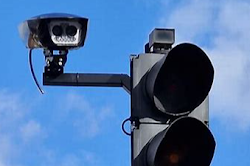
Transport for London have published their first set of what must loosely be described as "numbers" since the ULEZ was extended, from their ANPR cameras and payment / fines records.  It's fair to say that little can be taken by way of meaningful conclusions from this effort, although it is conceivable they'll be in a position to do better between now and the Mayoral election next year.  Whether "better" will include anything genuinely meaningful and useful is open to question.  Don't bother looking at what has appeared in the meejah on this: the TfL numbers provided are so ropey that pressmen and politicians alike have been resorting to guesswork in an attempt to make a commentary-narrative from it.

Under the weighty heading "Compliance Data" we have been given numbers for the first month, plus historical figures, supposedly for the purpose of demonstrating "improvements".  Can they properly be compared?  No, because the number of cameras deployed has been changing p- increasing - throughout, AND coverage by cameras in the extended zone was very patchy indeed in that first month.  (Some boroughs have not been cooperating, which means TfL has been largely confined to installing cameras on "its" roads - the Red Routes - although these do, or ultimately will, provide quite a mesh for capturing vehicle movements of any distance within the full zone.)  Maybe, perhaps some time in 2024, they'll have a fairly full network of functioning cameras.  Even then, there are helpful online resources enabling the crafty driver to (attempt to) plot a route that avoids them.

Then there's the obvious issue that drivers' behaviours in the early weeks of a scheme aren't necessarily indicative of how things will be when it settles down.  

TfL's own commentary cheerfully mashes up DVLA data relating to vehicles known to exist and be registered to a London address, with vehicles actually logged by the cameras.

Finally, there are as yet no data whatever on air quality which in principle is the purpose of the exercise.

Granted that much of this data shortfall will "improve" over time (in the statistical sense of more cameras in action, data collated from a longer period of the scheme's operation, and air quality data actually being provided), it still isn't clear we'll get solid conclusions on what ought to be the political issues arising.  Partly that's because all the politicos involved are quite capable of cherry-picking data, not to mention abusing statistics and of course lying outright.  But even if the data were turned over to the most objective statistical analysis, there are several fundamental problems, including:

  1.  It is really obvious that the number of dirty old bangers on the road has anyway been decreasing steadily, for the simple treason that they fall off the perch eventually and are replaced, if at all, by inevitably newer, cleaner models.  This has been going on inexorably for decades.  Khan won't be able to prove what part, if any, of the "increase in compliant vehicles" is down to his ULEZ extension, as opposed to the steady march of technology, or indeed to people no longer being able to afford to drive - including firms going out of business.  He may not even find a handy inflexion-point on the graphs to call in aid.
  2. Still less will he be able to conclude definitively on any changes in air quality that might be registered in due course.  (a) Road vehicles are only one contributor to air pollution.  Another very large contributor is the vast fleet of diesel engines associated with building sites: diggers, cranes, gennies, etc etc.  According to Private Eye, Khan has resolutely refused to implement the latest European standards on building-site emissions, on the grounds that to do so might impact on London's economy (and he's probably right, at least at the margin).  Plus, (b) the road network is constantly changing - indeed, Khan himself is having a new cross-Thames tunnel constructed, which is bound to result in increased traffic.  Stick all that up yer exhaust pipe, Sadiq, and smoke it.
None of these objective difficulties will prevent the politicos from bandying their chosen "analysis" next year - and of course Khan from brandishing his cute little book "Breathe" on the subject of air quality.  (Nicely reminiscent of Gordon Brown who laughably wrote a tome on "Courage" ...) 

There are several possible desiderata in play**, that in an ideal world we might seek to audit.  The easiest will be "number of compliant vehicles on the road".  But that is at best a proxy for "air quality", and if the latter doesn't show a material improvement that can somehow legitimately be claimed by Khan's scheme, the former will be irrelevant.  Which leads us to "value for money".  Ah yes, VFM.  Well, let me simply say that last month I scrapped a car, for which Khan kindly paid me £2,000.  Which was around double its market value (or three times what Webuyanycar offered me).  Me and tens of thousands of others.  Thanks, Sadiq.

ND 

____________

** Some will suspect that another desideratum is - more cameras surveying our streets ...

Sunday, 29 October 2023

Reforming the NHS and the laws of politics

Many years ago as a young local councillor, I discovered that politics is bedevilled by the sheer irrationality of our electors.  London Transport (as it then was) proposed to make some perfectly sensible changes to the bus network in my area, and held a public consultation.  A woman rose and made an impassioned speech in two parts: 

(A)  the current bus service was shit;  and 
(B)  it mustn't on any account be changed, in any particular.

I was very glad it wasn't me in the chair, because I find it really difficult dealing with stuff like that ( - the same motive that caused me to recoil from being foreman of the jury on which I sat recently; and was heartily grateful someone else accepted that solemn duty).

The public's attitude to the NHS is the same, only on a truly monstrous scale.  Here's an extract from a piece in LabourList last week
Normal people are very capable of holding contradictory views in their heads, especially in subjects about which they know little but feel strongly ... paradoxes, which have regularly been witnessed in opinion research ... are of profound importance as Labour thinks about how to frame its NHS offer running into the next election. They are:
- Everyone loves the NHS and yet in focus groups it quickly becomes apparent that absolutely everybody has a personal horror story about waiting lists or botched admin. These stories flow from them like a public policy fever dream.
- Everybody knows that the NHS is in desperate need of reform – and yet in focus groups almost nobody believes such reform will work. Getting people to imagine a high-performing NHS is very, very hard.
- Everybody knows that the NHS is in desperate need of investment – they see it with their own eyes every time they visit a hospital. And yet nobody believes it will make any difference to the service they are experiencing.
The piece goes onto say that "[Wes] Streeting’s speech at [Labour party] conference seemed to try to reflect these paradoxes and even solve some of them."  He's also recently told the Royal College of GPs that Labour "won’t entertain requests for blank cheques", which is rather what they have in mind.

Assuming he & the rest of Labour are seriously preparing for power (as well they might), I very much hope this all means they have taken heed of Drew's Laws of Politics #1:  Never buy off anyone at a higher price than absolutely necessary.  Virtually no voter will change their allegiance based on the precise nature of Labour's NHS policy next year.  But Labour could get itself into needless trouble by promising the earth, tempting though that must be.  Now one might say: Satrmer is such an accomplished liar and shameless U-turner, he can say whatever he will and then renege on it as PM, just as quickly as he always has with any other pledge or promise he made to the Labour faithful since 2019. 

Still, he'd probably rather not.  Might Labour then be the first party to come to power with a bit of a free hand on the NHS?  We do all really know it can't go on like it is.

ND 


Wednesday, 25 October 2023

The future price of electricity

Round these parts we often have a bit of fun at New Year, predicting prices etc.  We've even been known to suggest a few punts that might be taken.  That said, solemnly forecasting commodity prices etc as if it's a science is a fools' game.  The track record of "respectable" price forecasters is truly appalling - and that's not just because we're waiting for cleverer chaps to come along - it's because it is impossible.  Of course, they fact that plenty do it anyway is a tremendous boon to liquidity and commercial life generally: you always need to find someone to take the other side of a bet.

Having registered those points, we now turn to electricity.  From the Green corner (and indeed Miliband in the Red corner) there is currently a mighty howl going up: if we want to get the price of electricity down, we must accelerate "investment" in renewables.

Well, no.  This belief in "renewable electricity = cheaper electricity" is based on a couple of things, neither of them worthy of being the basis of policy.  First, there's the naïve view that because wind and sunlight are "free", this means the resulting electricity must be pretty cheap, too.  For those arguing in that way we can even helpfully chip in that sometimes, wholesale prices of electricity go negative!  All of this is true, but it has very little bearing on what the long-term, sustained wholesale price will be, when very costly capital equipment is required on a vast scale to intermediate between (e.g.) "free wind" and the consumer who wants power on demand, 24/7, every day of the year - and who finds himself being forced to "invest" in that capital equipment at exactly the same time everyone else in the world is buying the same stuff.

Secondly, and perhaps based on the first point, there's the entirely religious view that of course it will be cheaper because it's virtuous and clean and generated locally and that nice Caroline Lucas says so and, errr, well it must be.  To me this bears strong resemblance to those who argued that of course we'd be better off financially after Brexit, because, well, because.  It is of course perfectly fair to espouse the political view that Brexit is the way to vote - I espoused it myself - but please don't tell us it'll be cheap.  And exactly the same holds for renewable energy.

The underlying reason is similar in both cases.  Absent a subsidy, any time businesses and individuals are constrained to do something in the economic sphere that runs counter to what they'd do given the freedom to make their own informed economic decisions, that is prima facie gonna wind up costing more.  Of course there are exceptions: once in a blue moon there is genuine market failure (e.g. in energy, the practical inability of tenants and some householders to do the economic thing as regards short-payback insulation etc); and sometimes an economically viable new technology just hasn't become socialised yet (LEDs). 

Governments make people do more expensive things than they might choose to all the time, for policy reasons sometimes sound, sometimes not (and in any case, political policy is frequently politically contestable).  To me, the key is that politicians shouldn't lie about these things.

Now governments could choose to manage many of these types of policy intervention via general taxation.   That's what they do in the case of, e.g., the policy decision "we need nuclear submarines".  But mostly, they try to offload the cost onto the punter in various ways.  And that's certainly the case with most aspects of Green policy, in this country and elsewhere.

This being the case, all the evidence is there that wholesale electricity prices will rise, and continue to rise, over the very lengthy period over which it is intended - by almost all political parties -  we will aim towards "net zero".  This is so glaringly obvious, it barely needs explaining in detail: just sit back, watch and point.  But put on the ear defenders, because the Milibands of this world will continue to bellow that it'll be cheap ...

ND

Monday, 23 October 2023

Diversity to the nth degree

One of the leading professional bodies in the energy sector is, errr, the Energy Institute.  (Formerly known as the Institute of Petroleum, but they clearly saw the writing on the wall a long time ago ...)

I think we can guess what the average profile of the membership looks like.  So here's the Membership page from the www:


Pretty funny, huh?  Is there any point in asking: "now aren't we told that when someone looks at a body of people in authority etc, and is forced to say 'I don't see Anyone Who Looks Like Me', then that's a jolly bad thing - ?"   

No, there's no point whatsoever.  What we can say is that if you need energy in any shape or form (as some of us do), on average it will be provided to you by a supply chain of hairy-arsed people who aren't remotely represented above.

ND

Friday, 20 October 2023

RWC: England not too badly placed

OK, so England beat Fiji on muscle-memory, as predicted.  But overall, I'm more optimistic than I would have expected to be at this stage.  Partly, that's because England have a history of building to the later stages of the RWC rather uncertainly (2007 etc, and even including 2003): but mainly because, notwithstanding 2019, South Africa isn't a bogey team for England.  Let me explain.

In a given period of time, most teams seem to have a semi-irrational bogey.  For years, France couldn't get past England in any competition whatsoever.  Australia often seem to freeze against England.  And France themselves have lately done the job on England.  (England would also fancy New Zealand rather than they would have Ireland ... but let's not, *ahem*, get ahead of ourselves.) 

So - back to Saturday last: what did we witness last week?

Farrell:  for about 10 minutes towards the end, Farrell more-or-less earned his pay - at long last.  (Right up until his crazy knock-on right near the end, which might easily have seen him in the bin at the very death.)  That's a pretty thin return on the many years of undeserved England pay he's drawn.  We'll never know whether Ford + a different captain could have done the same job over that 10 minutes: but then again, the alternative combo might well have closed Fiji down even earlier.  Counterfactuals are like that.  So I'm unrepentant: Farrell shouldn't have played.

Smith:  well, he didn't pick himself at 15, and he gave it everything he'd got.  But, as they say, a good big'un ...  Anyhow, it's irrelevant now; and tomorrow, Steward it will rightfully be.

Tuilagi:  we've all heard the tired old saying, uttered continually over more than a decade - "if Manu's fit, he's in".  Well, by some miracle he's managed to stay fit.  But how many more times is it deemed satisfactory that he storms into a match and grabs a dynamic early try, then fades into the background?  If that's his MO, take him off after 30 minutes. 

Lawes:  how many more times can he be expected to go to the well and draw performances like that?  Unless he has truly superhuman powers of recovery, I don't like to imagine the shape he'll be in after Saturday - whatever duties might be sought of him beyond that point.

Earl:  speaking of super-human ...

ND


Footnote: apologies for the garbled early draft of this post for those who encountered it. 

Monday, 9 October 2023

Farrell / Part 3

Alright, so Farrell now has his record points tally and sentimental indulgence has been granted (well done that lad) - can there be any remaining reason why he isn't given the shove?  If his abject performance on Saturday isn't enough to have him dropped, Borthwick deserves everything that follows.  Fiji might just about be sufficiently shaken that they can be beaten in the quarters using muscle-memory alone: but an England appearance in the finals seems highly unlikely with Farrell on the pitch in any other capacity than water carrier.

Farrell père, now that's a different matter.  No obvious sign that the Irish have peaked too early, is there?

ND

Sunday, 8 October 2023

Wars and rumours of wars

The Hamas attack on Israel is quite astonishing - shock, and maybe even awe.  To pull off coordination and surprise like that in a space so confined and - as we are given to believe - so intensively, comprehensively and 'intelligently' monitored, is little short of impressive.  (And on Putin's birthday, too ...)  So much so, that it can easily trigger all manner of speculation - but for now we must wait for more data and developments.

However, some very broad comments can be essayed.  From the start of Putin's war upon Ukraine, it was obvious that the implications for Taiwan would be uppermost in the minds of some important actors.  Several leading commentators assumed that Ukraine would provide a distraction that allowed other 'geo-political initiatives' to kick off, with Taiwan heading the list (by dint of the seriousness of the global implications) but with the middle east also very much in mind, alongside the Balkans, the near east and central Asia.  In point of fact, for many months nothing much really happened.

Maybe the waiting is over.  In the runup to the Hamas offensive we've seen Armenia humiliated, Serbia stirring the pot, Syria being brought to the boil, Putin meeting the Wrong'Un ... and there are no doubt other things I've overlooked.  Players like the latter, Turkey and Iran are always looking to manoeuvre purposefully for advantage, in contexts of expansionist policies.

Coordinated?  Woah!  - down that rabbit-hole, lunacy lies (e.g. "The flywheel of WW3 is spinning faster and faster ...").  For now, let's just say "opportunistic".  Sometimes, though, just because you're paranoid, doesn't mean they aren't out to get you ...

ND

____________

Footnote:  we don't choose to let this blog be, how shall we put it, a forum for "partisan middle east rants".  Some do, we don't.  All our regular BTL commenters have respected this over the many years, for which our thanks.  Any, errr, newcomers / anons wishing to flout this policy will not be hosted.   

Wednesday, 4 October 2023

Gordon Brown's aircraft carriers - looking sillier than ever

'Silly' is too light a term for Brown's costly pork-barrel folly.  He lumbered us with two ocean-going white elephants that wouldn't last 10 minutes against the Chinese.   ('Prince of Wales' !  What cynic came up with that? - as we've joked before.)

That prediction of fragility in combat might have been conjecture until very recently, albeit fairly universally endorsed.  But now ... well, now we've seen Ukraine defeat Russia's much vaunted Black Sea Fleet with little more than naval drones, aerial drones and some helpful, accurate intelligence from its friends.  Quite literally, that fleet is no longer a combatant: reduced to ignominious retreat to more distant ports.  Maybe - just maybe - US Carrier Groups have so much air-defensive firepower that they stand a chance of defending the mighty jewel at the centre of the protective ring.  But maybe not even them.  And certainly not the RN.  Asymmetric warfare at its apogee.  Like the advent of the torpedo, before destroyers were invented.  Think what anti-capital-ship effort even Iran could mount these days, let alone China.

Did I say a costly folly?  The expenditure alone - past and ongoing - on the UK's aircraft carriers is bad enough.  But the way that the very possession of the carriers drags UK defence policy into deep and distant waters will probably be more costly still.

ND

Thursday, 28 September 2023

Self-identifying is completely out of control

The age of pandering to individuals and their whims might, I suppose, be seen as some asymptote of the rising trajectory launched by the individualism of the 1960s, coupled with a kind of American liberalism-positivism that says "you can be anything you want! [sotto voce ... if you are willing and able to do what it takes]".

Well, not really.  As well as the lunatic business of allowing young people (often in the hopefully-temporary grip of some pathological condition) to re-gender themselves upon a whim and no meaningful rationale, there are other worrying trends**.  A very good friend of mine, a qualified and highly experienced psychotherapist, tells me that people these days are prone to walking into consulting rooms and self-declaring themselves to be suffering from PTSD.  And of course 'ADHD' is bandied around equally loosely - frequently by parents excusing their badly-behaved offspring, & schools ditto.  Both conditions, if they are to be meaningful, require careful diagnosis: in the case of PTSD, requiring weeks if not months of observation.

Are these complaints the statements of practitioners trying to make a role for themselves?  Well, I think we can discount for that and still recognise that things have gone a long way down a ridiculous road.  We know what Gove means about 'experts'; but technical expertise on serious matters is still not to be idly skipped past.  But the evidence-resistance of much of the population is growing as fast as the antibiotic-resistance of many a strain of nasty bug.

The consequences may be just as bad.  We are all doomed to be dominated by people who think they are Napoleon: and we aren't allowed to disabuse them - still less deploy the Men with White Coats ...

ND

____________

** There's another complete discussion to be had about the self-identifying, self-appointed "voices of the community" who step in front of the camera / Police panel / parliamentary enquiry in order to ventriloquise said "community" for malign purposes of their own.

Thursday, 21 September 2023

Sunak's net zero rethink: good politics?

Without the slightest doubt, every nation will be forced to rein back its 'net zero' plans - because with the technology available right now, they are infeasible, never mind costly.  That's even before we factor in the eventual but inevitable electoral unpopularity of the 'politics of compulsion'.

The questions, therefore, are of timing and tactics.  Sunak has decided to make it a General Election dividing line.  The ULEZ fiasco speaks in favour of this judgement, but as Chris Dillow is wont to say - but, but, but ...

The greens have obviously been out in force from the moment this broke - prematurely, of course and obviously leaked maliciously by Someone (the candidates for having done this are legion).  Right now it looks like a tsunami of "international condemnation" is being orchestrated.  Starmer, for sure, has absolutely no desire to be tarred with anything here, including becoming the Green Champion; so he'll just snipe judiciously and try to restrain Ed Miliband & other rank liars who'd love to promise to reinstate every crazy scheme, and more.  We know this of Starmer: he has form, including specifically on 'green' issues of which ULEZ is but one.  But there will definitely be some free hits available to him here, and he may not be put on the "OK-so-what-would-you-do?" spot very much at all.

So Sunak has gone for the 'up-front partial-truth-telling' approach, which is looking a bit, errr, courageous right now.  He should at the very minimum have come up with a Cummings-style Very Good Slogan: "more pragmatic, proportionate and realistic" is not it !

What other strategies are available to governments wishing to back-pedal, as they all must?  Here are some:

  • say nothing, but simply miss all targets as they come along, as will inevitably be the case, and deal piecemeal with whatever opprobrium arises, as and when.  Hope it's the other lot that will have to break the Bad News.  (Even Sunak is still doing a bit of this - viz retention of the NZ 2050 target.)
  • wait until after an election
  • quietly but positively engineer delays in costly net zero measures (easily done) so that, perhaps imperceptibly to observers, the actual costs being incurred are materially reduced
  • build consensus before back-pedaling, via a careful campaign of softening up pubic opinion
  • wait for an absolute crisis which clearly derails their net zero plans, so that nobody demurs (actually, we just had one of those and it was only partially exploited thus)
  • come up with a quid-pro-quo that the electorate finds rather attractive, e.g. - enough of the crazy heat pumps, but we are going to insulate all your homes
UPDATE: spurred by Matt's comment BTL, there is another consideration - the crazy aspect of having targets "legally binding".  Well, Parliament can do whatever it likes but in jurisprudence terms, this is a real nonsense and, as we've seen, leads to endless fatuous court cases, in the UK and other countries.  As I've written before, there will logically come a point where either (a) the courts tire of this, and rule in such a way as to neuter it, and/or (b) governments tire of it, and legislate it away.  Another item for the strategy list.   

What do we reckon on all this?  Maybe Sunak reckons he has to take risks like this if there's to be any hope at the next GE.  Has he judged the politics of this correctly, or has he been just too candid for his own good?

ND

Tuesday, 12 September 2023

(1) Demise of Wilko; (2) Rise of the subsidy-stuffers

Evidently undeserving

(1)  So, farewell then, Wilko.  Always seemed a nice store to me.  We'd all welcome BQ's informed take on What Went Wrong ...

(2)  The other big business headline on the same day was BMW's decision to make the new electric Mini in the UK rather than China.  Well, obviously multi-dimensional politics there, but the aspect that interests me for now is the big subsidy from HMG.  That's evidently the mood of the moment.

Evidently highly deserving
Going back, say, a decade, international trade law in most of the West was broadly agin state support.  Obviously, several countries had a history of mercantilist policies, explicit or under-the-counter, but it was supposed to be on the wane and the EU, to be fair, mostly clamped down on it.[1]  

Well, that's over and no mistake, ever since Biden's IRA drove a coach and horses through it, if not before.  Germany is of course screaming to be allowed to do the same, although see this intelligent piece from our old motorbiking friend Yanis Varoufakis which indicates why a number of EU countries won't be so keen to let them without far-reaching "reforms" in EU treasury governance.  Meaning a lot more "Europe" for all of them.  We shall see.

When push comes to shove, it seems, everyone is a protectionist.  Let it be recorded that in happier times, Free Trade accomplished a very great deal and we may live to regret its passing, imperfectly enforced as it undoubtedly was.  You don't need to go far in history - even (say) that of ancient Greece (you listening, Yanis, old chap?) - to find tremendous examples of new-found prosperity born of free trade; and its converse, prosperity ended by a collapse in trade.  C@W, right?

ND

__________

[1] Of course, the really big ones, like Hinkley Point C, were always waved through, if only eventually & after a bit of horse-trading at the top in Brussels: "too big to be stopped"

Monday, 11 September 2023

Farrell / Must Be Dropped / Part 2

From Curry's sending off in the third minute of England's RWC opener on Saturday, England were backs to the wall.  And how George Ford responded! - 27 points from his boot, and a masterpiece of strategic adaptation and game management (which he'd been doing for Leicester all season before his nasty injury in the 2022 Premiership final[1]: so, no surprises whatever).

The suspended Owen Farrell could no more have pulled off that essential performance than fly over the moon: all he'd have come up with would have been blood-and-guts, huff-and-puff, & probably another card.    And England would effectively have been out before the tournament had even really got going.  His red card and still-current suspension during the warm-up series was as felicitous for England as that.  

And there is no obvious vacancy at 12.

This is the RWC; this is serious.  So, back to where we were four weeks agoFarrell Must be Dropped.[2]  

ND

____________

[1] Haven't seen this mentioned, but nearly half England's starting 15 (and some of the Argentinians!) have played with Ford at Leicester at one time or another.

[2] Actually, for a little more creativity: when his suspension is lifted, Farrell could be put on the bench against the contingency some opposing eejit decides the solution to Ford's dominance is to drop him with a forearm to the head.  Then the bonehead can take over against the remaining 14 men.  Smith can also be on the bench as a general-purpose option: people already like the thought of him at 15, and he could probably do 9 as well as 10.

Thursday, 7 September 2023

Putin steps closer to the edge

A month ago we wrote

Scrapping the grain deal, and blasting grain storage facilities, looks like a serious blunder ... the potential for a grotesque Putin mis-step coming along soon. As critical Russian commentators have been quick to point out, a de facto Russian blockade of Odessa will drive Ukraine to export via the Danube. Now: much as Russian historians love to recount the Battle of Izmail, do they really plan to blockade the Danube, arguably Europe's greatest river linking 9 countries (mostly NATO members), 4 national capitals and a large amount of trade? Really? Article 5 looms large here ... Putin's capacity for cocking things up on the world stage has known few limits since 2021 ... I can't guess what he'll do next

Well it rather seems I did, because a day or so ago Russia bombarded Izmail, with drone debris crashing into Romania.  The latter (a NATO member, obviously) is hosting a lot of allied military resources right now, including UK fighter aircraft that fly top-cover for Black Sea reconnaissance, and very regular border patrols by the US Navy and Italian Air Force.  All the triggers are there.

This is, however, as nothing compared to the protective shield around the Polish areas bordering Ukraine.  The weight of anti-aircraft / anti-missile defences there is like nowhere else on the continent of Europe.  People have often mused - including BTL hereabouts - as to why Russia doesn't interdict the large daily flows of munitions across the Polish border.  Well they might try: but it wouldn't be easy.

There's a case to be made that things are ratcheting up to something very tense this coming winter.  It used to be a rule of thumb in ancient Greece that no city-state could survive a second winter after its lands had been ransacked two summers in a row - which might be in Putin's mind.  

He might also like to recall that Athens successfully** devised a solution to this: significant use of imported goods along heavily-defended lines of logistics.

ND

___________

** Yeah, yeah, I know that eventually Athens lost to Sparta.  But that was imperial over-reach born of monumental, buccaneering hubris. 

Monday, 4 September 2023

Hedging for Whingeing Farmers - part 2

Some valuable practical detail in BTL comments after that last post - very much what I had in mind when writing "very real practical complexities around our simplified account above - which might have made for a genuinely interesting & informative Countryside piece."  Let's take a look at the issues they raised, & some more that I'm chucking in for good measure.

1.  The ability to hedge, even in principle.  (A) Scale.  Jim has suggested the threshold for being able to get into grain futures is 10,000 acres.  There will always be a lower limit (although with spread betting and ETF, that's been getting lower and lower) and certainly I have no better data.  And why shouldn't there be a minimum size / critical mass for any particular viable line of business?  We scorn the pitifully small energy suppliers (well, I do) for their lack of capitalisation, and wonder WTF they got a supply licence from Ofgem in the first place.  Why shouldn't some industries be for the competent Big Boys?  Nobody has a God-given right to set up a "craft" blast furnace just because they fancy.   

1(B).  Credit.  - maybe thought of as an aspect of 1(A), but it's a distinct issue.  It's always the case that a non-creditworthy counterparty (however large) can't get an OTC forward contract.  That's because payment may become due either way, & maybe they ain't good for the potential monies due.  Of course, if you're trading on an exchange (futures), you'll need to put up collateral and pay ongoing margin (if your position is moving out of the money) to minimise the credit risk.  That again may exclude some players if they can't put up the table money.  Again - so what?   

2.  Weather.  As raised by a couple of you.  Yep, this is one of the 'operational risks' that actually has little directly to do with hedging the financial exposures involved (though see 3. below on volume & Basis).  Weather risk will impact on farmers irrespective of market risk - it can impact adversely on timing, quantity and quality.  There was a time, in the late '90s / early '00s, when lots of people believed a big market was going to develop that would offer 'weather derivatives', there seemingly being a vast potential range of applications for such products.  It never really took off (for reasons we might discuss in another post), despite many big players putting in a lot of time, money, people & effort go get it going.  So:  as was mentioned BTL, insurance always was, and remains, the first recourse.  

Insurance, BTW, should always be anyone's fallback if they can't get a satisfactory hedge - and not just for weather, and not just for farmers .  No credit issues, except that naturally you need to be able to afford the premium upfront.  I say 'no issues' but of course as the client, you always have concerns over the creditworthiness of the insurance provider.  it's a heavily regulated sector, for that reason.

3.  Volume.  (Also mentioned BTL.)  Being subject to several unknowns - weather being perhaps the biggest - how does the farmer know exactly how much by volume to be trying to hedge?  This volumetric uncertainty is an intrinsic feature of some sectors, while virtually unknown in others.  The answer, as far as it goes, is easy:  pick a sensible, maybe conservative estimate, and hedge that.  You're then exposed on the balance, be that long or short.  Coupled with weather insurance, it's the best you can do.

4.  'Basis Risk' generally.  In markets where volumetric risk is small (& hence not requiring a whole risk-management discipline of its own), it would be viewed as a subset of the more general category of 'Basis Risk' - where there's an element of exposure remaining even when you've hedged the best that anyone can.  It can arise from a heap of different factors impacting the 'basis' of your hedge vs the basis of your own situation, e.g.:

-  the forward / futures contracts are only traded in lot sizes that don't allow you to create a perfect volume match;

- the settlement of the traded forward / futures is at a location and/or date that doesn't perfectly match your own locational / timing situation;

- the settlement is for a quality or grade of product that doesn't perfectly match that of your own product (e.g. a very special grade of oil for which there is no specific forward contract).  

That last point - quality - was indeed specifically raised in the Countryfile prog - about the only interesting thing that was aired.  They said that weather could affect what type of grain the crop would turn into, in terms of how it would be viewed - and priced - in the market.  I hadn't known that, but it makes perfect sense. 

*   *   *   *   *

To my mind the Countryfile team should have been at least mentioning some of the above, just as they very fairly (and in an easily-understood manner) alluded to the Basis risk of the quality uncertainty.  It's the job of TV to make these things accessible, and the whole of it is no more difficult than the quality point.

Finally, though, we get to Sobers' really interesting - and quite technical - comment that, courtesy of outrageous hanky-panky on the part of the hedge-providers, for the farmer to enter a forward / futures contract they are in practice writing a naked option.  If that terminology doesn't mean anything to you, well (a) I think Sobers explained the essence of the problem well enough, in lay terms; and (b) writing a naked option is about the most dangerous thing you can do in financial trading.

As many of you will know, agriculture isn't my sector.  I've already noted that small players needn't expect to find things just as they'd like them in any sector, so maybe this is really just another manifestation of 'too small'.  That said, to me it's a pretty shocking matter when, within an industry where quality matters so much, there aren't objective standards and assays that can be relied upon for both parties.   The whole of trade finance depends on it.  WTF should agriculture be different to energy, or metals, or pharma?  Yes, fraud happens in any industry, but what Sobers reports is daylight robbery & very depressing.  Is it really a problem for bigger farmers?  In principle there would, IMHO, be a huge opportunity for large, honest players to step into this situation charging a very modest premium for a proper service.

ND 

Tuesday, 29 August 2023

The BBC & the whingeing farmers of Countryfile

Hansen & partner: disingenuous whinge
The Beeb: everybody has their favourite gripe but where to begin?  From down on the farm at the highly regarded Countryfile, here's just a little straw in the wind.     

Adam Henson is one of their primary reporters, and evidently a genuine (and seemingly prosperous) farmer to boot.  So a couple of episodes ago, he's discussing with his "business partner" the generic farmers' problem of money, that vital perennial crop.  Here's what the two of them say (20:12 mins in):

"The trouble with grain is, it's a world commodity price ... we don't determine the price at all ...  Geo-political factors like the war in Ukraine ... Fertilizer costs ... Volatility ... A change in market price can cost us thousands ... It's pretty scary, really.  We've spent all the money, we've got a reasonable crop here ... when we decide what to grow, we're gambling on what each crop will be worth come harvest time ..." 

Oo-err, missus, sounds really scary.  Volatility!  War in Ukraine!  Changes in global market price!!   You'd never guess that this has been the farmers' oldest problem for millennia - and, equally, has been solved for a very long time indeed.  

For those unfamiliar with the basic principles of hedging and financial derivatives: whenever a player takes a fixed-price forward position (here a farmer, investing in seed etc at fixed cost today, but effectively playing in the forward cereal market against delivery at harvest time) in a market where prices are liable to change, that player is exposed to potential adverse movements in price.  They are of course simultaneously exposed to the upside of potentially favourable price movements; but it's the downside risk that mostly concerns us (and, seemingly, Henson) here.

Is this exposure necessary?  Not for a very long time, since the ages-old development of forward markets:  why doesn't Henson avail himself of the forward market for the cereal he's investing in?  In other words, forward-sell all (or at least a large part of) his crop at the very same time he buys his seed?  Putting matters simply (we'll note some complexities later), one generally assumes that at the time of his making the fateful decision, there must be a positive margin available to him, i.e. between his fixed costs and the forward value of the crop - else why is he even considering it?  So, courtesy of forward prices, that margin is there to be locked in, eliminating first-order Price Risk.  Now, his risk profile is mostly that of the operational risks associated with weather, blight etc - the very stuff of farming, even for a player bewildered by the financial markets.

Does Hansen not know this?   I think he must.  So why does he bleat in such a dumb fashion?  More to the point (since farmers always whinge & we all know this), why don't BBC editors intervene, & make him say something more comprehensive & honest?

Later in the week we'll take a look at some of the very real practical complexities around our simplified account above - which might have made for a genuinely interesting & informative Countryside piece.  But for now, let's notice how Hansen and his mate signed off.

"as a fairly large farm, we can afford to take some gambles ... "

And there we have it - the pair are gamblers! - which is the proper term for anyone with a forward-price exposure and the ability to hedge, but who doesn't in fact avail himself of the hedge.  Next time: how some of these issues play out in the Real World.

ND

Monday, 21 August 2023

Outstanding Culture-war Satire

This is not a short read.

But it is a beautifully crafted piece of satire on the dreadful culture-war assault on freedom of expression in academia.  Worse in America, of course, but plenty of symptoms over here.

Enjoy.

ND

IMPORTANT UPDATE:  What did I just write?  Here's a very worthwhile crowdfunder (IMHO) for a lady academic being very badly treated indeed - by the Open University

https://www.crowdjustice.com/case/almut-gadow-academic-freedom/ 

Thursday, 17 August 2023

Michael Parkinson - a superb source of TV humour

Parky, RIP
There are two episodes of Parkinson's programme on the Beeb that I remember with particular fondness: both relate to comments made by guests, reacting to something said earlier in the programme in an exchange with another guest.

1.  Raquel Welch / Eric Morecambe

The glorious Raquel said:  "I never thought of myself as pretty-pretty ... but then when I got a little bit older and the equipment arrived ...".  After Parky had finished wetting himself and she'd departed, on came Eric Morecambe (and Little Ern - but he contributed less than nothing).  Said Morecambe:  "I was 15 when my equipment arrived ... (relapse of Parky) ... pause ... I was 40 when it left!"  (more collapse).  "I'm 45 now, and I think it's coming back again."

2.  John Conteh / Peter Cook

I'm not the only one who remembers this one: here's the Graun in 2018

... Parkinson asked another of his guests, the boxer John Conteh, whether it was true that he avoided sex before a fight. As Conteh squirmed, Cook delivered a comeback of extravagant brilliance. “I wouldn’t ask you if you have sex before a show,” he said to Parkinson. A beat, then: “I can see that you have.

Unscripted television humour.  They don't make 'em like that any more.  Any of them.

ND

Monday, 14 August 2023

Owen Farrell - must be dropped

A bit of Monday Morning Quarterbacking here.  Saturday’s match against Wales confirmed, if confirmation was required – that the liability known as Owen Farrell is one that England’s RWC team does not need. Here’s the Graun’s Robert Kitson

While the braced 63rd-minute shoulder to the head of Taine Basham was not the absolute worst of its type, that defence misses the point. In addition to the obvious player-welfare implications, it was reckless and unnecessary.  Nor was this some helplessly overeager debutant flying in. It was England’s captain, who should have known better with his side reduced to 13 men, playing in his 107th Test. It should also have cost his side any chance of victory. 

To me (and many others) this has been obvious for many years.  At the 2015 [sic] RWC I wrote

I have been boring my rugby drinking buds for three years predicting that, at a crucial moment in the RWC, England will be down to 14 with Farrell cooling his heels in the bin.

And so it transpired, even though the 2015 details were slightly different: in the vital group match vs Wales, with England ahead, well positioned to finish the game off, and a critical penalty already awarded, in steams Farrell with an obviously premeditated late tackle right under the ref's nose, and the penalty is reversed.  As a direct result, Wales go on to win – and England go out ignominiously in the group stage.   On home soil.  Thanks, Owen, and yes, we already knew you're a hard bastard. 

Eight years on, and no lessons have been learned, either by the perennially dull-witted, thuggish player himself nor successive managers.   And so, two days ago he earned the red card that will see him out for at least the next two matches, and maybe more. 

Why are Farrell’s services retained?  Because, we are told, he is “England’s talismanic leader”.  Let’s think that through.  In Martin Johnson, the all-conquering England RWC 2003 team had a truly talismanic leader – no greater captain of any team at any time, I’d say – and Johnson, too, was no stranger to the early trip to the dugout at a particular point in his career.  The dog had been given a (fairly deserved) bad name and, disproportionately, the refs were ever-ready with the whistle.   But Johnson and everyone else knew this couldn’t go on.   By 2003 he had long since fixed it, and the problem period was over.   

Johnson also fulfilled impeccably his role at lock.  So: superb player; outstanding leader; bish-bosh tendencies under control: perfect captain.  By contrast … the petulant Farrell shouldn’t even be in the team as a player – his distribution skills are pedestrian and his kicking unremarkable – and when after all these years and warnings and penalties and red cards he still fails so comprehensively on the control criterion, he has only one box ticked. 

At this level, that ain’t enough.  Borthwick seemed to be mulling the axe for Farrell when he first took over in such awkward, unwanted circumstances.  Well, here’s the perfect opportunity to wield it now. Get on with it, man, oh, and recall Henry Slade forthwith. 

ND  

UPDATE:  Hmmm.  My argument stands

Monday, 7 August 2023

Marking Putin's card at a critical juncture

Chancing my arm with the trolls again ...  In May of last year, after Russia had proved itself quite unable to execute Putin's offensive plans (though it was still advancing westwards - by inches - from the Donbass start-line and supposedly threatening to turn Slovyansk and Kramatorsk into a classic 'cauldron') we gave him the following advice, (based purely on a military assessment): 
Putin's orders must surely now be: Define a defensible subset of what we now occupy - categorically including whatever it takes to water Crimea. Dig in; set up the resupply lines; and hold that territory to the last mercenary. Lay waste and abandon the rest ... the chunk in the map running north and east of Luhansk up to fiercely-contested Kharkiv looks to me like turf to be abandoned on the theory outlined here.

Well, well.   And what did he do, starting about 4 months later?  Yup, abandon the extension of his gains up to Kharkiv, and dig in on a defensible subset.  No charge for the strategic advice, L'il Volodya.  Unfortunately for Putin (and for a 100% C@W clean sweep), the chosen defensible zone didn't - in the judgement of his generals - include the west (right) bank of the Dnipro river[1] - so he doesn't get to water Crimea and other large agricultural swathes of his captured territory in the south east.  

Still, thus far his defensive lines are holding.  Going on the offensive against a prepared defence was, for Ukraine, always a massive stretch without (inter alia) serious air cover, as we made clear.  Plus he seems, just about, to have recovered from the Wagner flying column episode[2].  So: he's in the lead at half time in the Round 4 match.  But now we're at a perilous juncture, and things could start to go horribly wrong - not strictly for military reasons, but rather from the dumb strategic calls he's making.

- Scrapping the grain deal, and blasting grain storage facilities, looks like a serious blunder.  At long last, Ukraine is essaying some serious diplomacy in the "non-aligned" / Third World, which ain't happy.  FFS, there have been "talks about (peace) talks" held in Saudi, to which almost everyone was invited except Putin - and China attended!

[- While we're on the subject of China, Xi has banned export of all dual-use drones, detailing just the specs that define the very drones Russia has been importing as fast as it could raise the funds (often crowd-sourced).  Obviously, there will be "ways around this" - but what more of a stinging, demonstrative slap in the face could Xi dish out?]

- The corollary of the grain deal fiasco - declaring the western Black Sea unsafe for shipping - certainly makes things awkward for regular merchant shipping dependent on ordinary maritime insurance.  But - exactly as predicted some while back by the more astute Russian milbloggers - this opens Pandora's box: and Ukraine has predictably countered by (a) declaring the north-eastern Black Sea unsafe, followed by (b) successfully attacking Russian shipping there, just to prove the point.  It's one helluva logistical feat to mount a naval drone-strike off Novorossiysk, but that's what they've done.  For those who don't know, Novorossiysk is as important to Russian maritime exports as Sevastopol is / was for its navy.  Getting insurance for anywhere in the Black Sea has just become, errr, difficult.

This all looks to me like the potential for a grotesque Putin mis-step coming along soon.  As critical Russian commentators have been quick to point out, a de facto Russian blockade of Odessa will drive Ukraine to export via the Danube.  Now: much as Russian historians love to recount the Battle of Izmail[3], do they really plan to blockade the Danube, arguably Europe's greatest river linking 9 countries (mostly NATO members), 4 national capitals and a large amount of trade?  Really?  Article 5 looms large here; and although the Americans have cleverly declared that almost nothing will cause them to react with nukes, they have said it'll be a decisive conventional hammer-blow that will befall.

Putin's capacity for cocking things up on the world stage has known few limits since 2021: he'd better pause now, before crashing forward on this new path.  I can't guess what he'll do next. 

ND

UPDATE:  in BTL comments, I offered the following - 

I'd be interested to know what either side's response would be to freezing the current front line and giving instant NATO membership to 'West Ukraine' as defined by that line.  It's not on offer, anyhow. 

Well, er, maybe it will be: 

https://www.theguardian.com/world/2023/aug/16/nato-official-suggests-ukraine-could-give-up-territory-in-exchange-for-membership

 _________ 

[1] If you want to hold a river, you must hold both banks - old military precept.  Then again, Putin doesn't seem to hold with any basic military notions whatsoever

[2] There is a long Russian history of pretty bellicose "petitioning" of the Tsar but, so long as certain proprieties are observed, this has generally been an opportunity for an adroit Tsar to reinforce his position, with everyone conveniently blaming the "bad boyars"

[3] As did Byron in his epic Don Juan - over two characteristically ripping cantos!  (and historically quite accurate, too)

Monday, 31 July 2023

Culture War Cameo

Here's an entertaining extract from a recent Graun piece by Robin Moira White, "a discrimination barrister at Old Square Chambers, London, and joint author of A Practical Guide to Transgender Law": 

Trans people and their allies now know they will be better off under Starmer, Dodds and Cooper than Sunak, Badenoch and Braverman.

Now, what characterises the folks she doesn't like?  And the ones she prefers?  Oh my word, what might be the point she's making there ..?  

ND

Monday, 24 July 2023

Putin turns on a prominent milblogger

Russian 'milblogging' is an interesting phenomenon of the Special Military Operation.  Almost all milboggers are fervent nationalists, and some are self-evidently very well informed.  Nationalism doesn't always prevent them from being critical of their own side and, since most of them have high regard for the ordinary Russian soldier, their criticism is mostly aimed at the General Staff and points north, all the way up to Putin himself in some cases, encoded or en clair.  Given the epic military and geopolitical failings of Putin's Plan and its utterly crass execution (see this blog passim), they've had plenty to complain about.

Behind the glass wall, facing the cameras
And none more so than Igor Girkin, a.k.a. Strelkov, an individual of illuminating historical perspectives, genuine military knowledge and indeed military accomplishments in many spheres of combat.  A genuine do-er as well as thinker (he even enlisted as a private soldier and went to the front during autumn 2022: no joke, at the age of 51.)  Now, we know whom we're talking of here: the man convicted in absentia of being responsible for the downing of the Malaysian airliner; who headed Russia's proxy forces in the Donbass, etc etc etc.  On his own admission, in some of these conflicts he has ordered prisoners be shot out of hand.  He is, in short, a single-minded & ruthless operator with blood on his hands, as well as a fervent Russian nationalist.

But that doesn't detract from his knowledge and insight.  As a judgement from a distance, I'd also assess that he's entirely straight (within his own frame of reference) and sea-green incorruptible.  And brave with it.  Insofar as one can tell.  He has frequently given airings to views that oppose his own, and admitted mistakes.  (He also has the tremendous Russian facility for heavy-duty sarcasm: I have to believe many of his American readers would have a lot of difficulty in making out some of what he writes.)   And now he's been locked up.

Why now?  Good question, since Putin has put up with his trenchant critique for well over a year.  Well, characters like this are always difficult to deal with.  Strelkov was initially surprised by the invasion, and on the very first day presciently offered the observation that the attempted coup de main against Kyiv itself via the heli-landing at Hostomel was risky.  However, he immediately suppressed his doubts in public and, in his nationalism, loyally tracked events online in as supportive a mode as he could muster.  That lasted for about a month, after which he could no longer contain his disgust at how badly the invasion was being, and has subsequently been, conducted.  And in ever greater and compellingly accurate technical detail - the criticisms not of an armchair general** but as one who could have done better himself, even with the inadequate forces Putin threw into the fray.  

In his nationalism, Strelkov has long been deeply suspicious of Wagner, and had no time for what he called its "Verdun" strategy at Bakhmut.  But it was Prigozhin's Moscow-bound flying column that tipped him over the edge:  Wagner deliberately spilled Russian blood on its way north and that, for Strelkov, was the limit.  Unrestrained rants against Prigozhin followed.  Now obviously, Putin and Prig have come to a tense and complex modus vivendi; and it would seem that non-stop carping from sniper Strelkov is no longer acceptable.

The irony, of course, is that if they'd followed his sound military prescriptions from around mid March 2022, they'd be in a lot better shape than they are now.

I shall miss Strelkov's bracing analyses.  

ND

_________________

** We had some amusing BTL contributions mocking my own rather distant armchair commentary, but the authors might like to go back and check: I got to Strelkov's conclusion - it wasn't difficult - quicker than he did, at least in public. 

Saturday, 22 July 2023

The politics of (green) compulsion

If, as seems likely, the Tories held Uxbridge as a reaction to Sadiq Khan's ULEZ extension, well, we ain't seen nothing yet.

The UK has reduced its CO2 emissions by more than any other country** since 1990 - but this was achieved by (a) going for the low-hanging fruit (i.e. phasing out coal) and (b) de-industrialisation.  Although this hasn't been remotely cost-free, the costs have been loaded onto electricity bills and, frankly, haven't really been noticed.  But that phase of the game is rapidly coming to a close: very little low-hanging fruit remains down decarbonisation way.

The cost of such potential still to be exploited in the power generation sector is rising rapidly

Aside from incremental efficiencies that arise naturally from technical evolution, we've barely started on home heating, transportation, agriculture and much of heavy industry.  And decarboning those will be very costly indeed.

And then there's Behaviour.  Less travel.  Less meat.  Less creature comfort.  The greens, from Swampy and Greta to John Selwyn Bummer (© Jasper Carrot) have all been pressing government to start 'changing behaviours' - that's our behaviours - and while they'd rather that to be via 'leadership' and 'persuasion', there's little doubt that ultimately they mean compulsion.

I have a strong suspicion they won't be getting any change out of any UK politicians of any party (except just maybe a few Green Party hopefuls) this side of the next GE.  In this context, Khan is right out there on his own - and being rapidly disowned by Starmer, naturally enough.  Miliband has been well and truly sat on, so really it's only Ed "Drax" Davey we still need to hear from on the subject.

ND

____________ 

** France, of course, would claim to have had a lower-CO2 starting-point, thanks to its nukes

Friday, 14 July 2023

Smack of Firm Government?

Seven months ago I wrote that in his problems with public sector pay on many fronts, Sunak had been immeasurably helped by the sheer number of concurrent disputes, and the extreme claims being made in some of them.  There was 'obviously' no scope for him to concede them all, so he would find it easier to resist[1] them en bloc.

And thus, it seems, things have transpired.  How many PMs have even been able to stand at the lectern and say, no more talking, that's yer lot  -  and plausibly get away with it?  But, plus or minus the junior doctors, he might have done.

Even more remarkably, he even chucked in a culture-war twist: the award is to be partially funded 'by "significantly" increasing charges for migrants coming to the UK when they apply for visas and the levy they pay to access the NHS'.  To my amazement this has been very little commented upon (yet), and we may guess any belated squeals will not be originating officially from the Opposition front bench[2]. 

Is this the fabled Smack of Firm Government?  It has some of the trappings.  And in Starmer's current mode of saying 'no' (to the considerable dismay of the Left & the greenies) to everything that anyone suggests deserves a call on his largesse when putatively in power, presumably he's essentially going to take this development lying down - though it is always possible to script a hostile soundbite in response to anything.

So how does it all play?  Does it basically strengthen Sunak's standing with voters?   Or will it be a cause of sullen resentment?  A lot will depend on "whether it works", i.e. whatever inflation does next.  In any event, Starmer's stern stance makes resentment a lot harder to parlay into votes for Labour, so maybe it's the smaller parties that pick up the resenters.  Which, of course, may be a decent second-best for the Tories at the next GE.

ND

UPDATES:

(a) the predicted cries of anguish haven't been long in coming - from "charities, unions and politicians".  "Borderline racist", they cry.  But not Labour politicians, naturally (see above).

(b) see strikethrough below and dearieme's comment 

_____________

[1] Of course, BTL here Kev has pointed out the remarkable inflation-busting 'award' already made (passively, under the triple-lock) to pensioners, possibly to be repeated next time too.  But, hey, priorities / politics / votes.

[2] I find it hard to believe we've heard the last of this.  Not least, because the Tories are likely to big it up in order to provoke a leftie response. 


Tuesday, 11 July 2023

Erdogan: the Transactional Turk

Erdogan has really excelled himself this time, the major obvious casualty of his machinations being Putin and his ever more flimsy stature & general political dignity.  Drones, Sweden, Azov, ... what is the full nature of the Turkish "trade package"?  Does he have it in writing (from Biden / Ukraine / NATO / EU)?  Or is he just positioning himself for a Cunning Plan he has in mind?

(1) Transactional politics has upsides - and downsides

As I've written before, in some political spheres - foreign policy generally being one of them - the 'lines of logistics' can be incredibly short: unlike most domestic policy-making, it can be stroke-of-a-pen stuff instead of months & years of hard, practical grind, with all the attendant implementational friction & risks of material long-term projects.  (Thus, to take one of a million examples, Lenin took Russia out of WW1 in a morning.)  Some politicians, indeed some human beings in general, heavily lean this way: there's no situation they won't try to deal their way out of (negative) or into (positive). 'Transactionality' is one facet of this type of approach: Sadiq Khan is perhaps the most prominent UK exponent right now.   

The upsides are clear.  A stroke of the pen requires far less blood-and-treasure to resolve a dispute than 'going to war' or its analogues, & gets quicker results, too.

The downsides are there, too.  Obviously, transactionalism appeals not least to politicians of the bone-idle tendency.  Ditto, the heavily-overlapping subset of politicians who have no principles or red lines whatever.

And what can be done at the stoke of a pen can be undone just as fast.  Sometimes, "with one bound he was free" clever-cleverness doesn't cut it: a fundamental solution is needed, the hard yards can't be dodged**.  To give a foreign-policy example:  what could be more convenient for NATO backsliders like Germany than a neat, stroke-of-a-pen "resolution" on Ukraine that would mean they didn't need to restore defence spending to prudent levels?  Very neat, yeah.

(2) Downside for Erdogan?  Oh yes there is

I'll give you at least one.  Turkey is essentially 100% dependent on Russia for gas (as well as a lot of oil).  It gets very cold there in winter.

Less obviously, since the economic recession Erdogan foisted on his country Turkey has been having the utmost difficulty in taking all the gas they've contractually committed to.  They owe Gazprom a bunch of money.  Thus far, it's been forgiven ... That's on top of a cold winter in Turkey.

Transactions, transactions.

ND

____________

** Also, the Clever Stroke often leaves a very nasty taste in the mouth:  in the Claudius novels, Graves writes of how on a particular campaign, Claudius engineered a lightning victory by having his men take the enemy camp at night by crawling up silently through the undergrowth, with total success.  The 'victorious' Roman troops hated it:  they wanted a proper conventional scrap in the morning.  Their triumph-by-subterfuge "smelled of the candle".  

Tuesday, 4 July 2023

Thames Water: catastrophic downside

Asset-stripping is hardly new: but the first really big company to be terminally hollowed out by modern financial engineering was Enron (1987-2001).  The reason why it happened there, was completely the opposite of what's taken place at Thames Water.  Enron was chronically under-capitalised for conducting the business it was (very successfully) engaged in: giga-scale market-making in the energy sector, with attendant innovation and creativity that has been much missed in the sector since 2002 (sic) but never truly replicated.   Nostalgic laments aside, what Enron absolutely needed for its business model to be workable was to maintain investment grade credit status, because long-term dealmaking was its forte, and nobody[1] will do long term deals with a shaky counterparty.  

Why was maintaining credit status a problem?  Because (a) as an inevitable structural problem, cashflow lagged profit (which can be the death of literally any business, however sound);  (b) it couldn't borrow any more, which deprived it of the traditional solution to that issue; and (c) - the real killer - it was committed to perpetual expansion, it being traded on Wall Street as a growth stock[2].

This conundrum became fully apparent (to Enron itself: the rest of the world just gawped and invested) as early as 1993, when the financial engineering started.  For a few years there was ample opportunity to do some clever but wholly prudent stuff, resulting in a balance sheet that was a marvel of precise and efficient design.  However, by the end of the '90s what could be achieved by such elegant means was pretty much exhausted, and they started resorting to some deeply imprudent expedients, designed by Enron people who really knew what they were doing - and abetted by banks who should have known better - and could therefore build it very big and very bad.  (It didn't help that one of the main architects of all this was actually on the take in the literally criminal sense.)

*  *  *  *  *

Enough of history: it suffices that some potentially very dangerous financial technology had been designed and employed, able to be abused in completely different circumstances.  Enter highly capitalised Thames Water, with physical assets and guaranteed revenue streams galore; the most fertile ground imaginable for financial engineering - and ideal circumstances for gouging out all the cash and remitting it as dividend.  And so, it seems, they have.

How dangerous is this?  One might say: who remembers Enron now?  Didn't the lights stay on, and the waters close over?  Hopefully, optimistically, that's right: HMG has quietly resolved several seemingly vast corporate problems in the past, British Energy 2003 being perhaps the best example ("Nuclear Generator In Financial Meltdown" - never a comfortable headline).  With TW there appears to have been a bit of advance warning: and maybe with the recent 'rescue' of Bulb, some sensible generic thinking has already been done in government.  Maybe.  And Thames Water is squarely based on real assets.

But on the pessimistic side:

  • how likely is sensible generic thinking, in advance, within HMG?
  • Bulb's business model was trivial compared with Thames Water
  • with British Energy, when it went under its product hadn't been forward-sold to any degree, but could be (and was[3]), for an instant and constructive boost to its finances
  • the economy was in a much better state in 2003 to be standing behind any loose ends
  • some types of financial engineering are pretty toxic 

Which brings us to the elephant in the room: TW has suckered in a range of serious international financial players.  OK - so, caveat emptor and leave them holding the keys?  That may be possible in strictly legal / contractual terms: and HMG probably has reserve powers to direct the continued operation of the assets.  But here's the thing: like any financial player, those big Canadian pension funds and Far East investors really, really hate being left holding the keys.  In those circumstances, they have literally no idea what to do next: we know this, because it's happened many times around the world. 

So what happens now.  In coalface terms, there are asset-oriented specialists like Macquarie and Cargill who know all about restructuring and bailout.  They'd make fortunes from the gig: but they know what to do.  Is that how HMG will play it?  It won't look good.

More widely however, what does this do for the future attractiveness of UK plc for inward investment?  We've long been the envy of the world for how easily we've attracted cheap foreign dosh, and a large part of the economy is now based on it.  Kick away TW, and what do all these people do with their next chunk of money?  Equally great and easily-executed opportunities elsewhere don't grow on trees - but there are plenty enough, not least with government-backed Net Zero projects sweeping the globe.

In short, the worst-case scenario is, in sequence: (a) a serious investment strike by otherwise UK-directed money; (b) downgrading of UK plc's credit rating, with all its inflationary and currency implications; (c) drying-up of deal flow for the City.

This could be Very Ugly Indeed.  All the more reason why HMG will step in smartly.  But what if TW is just the tip of the iceberg?  Where's, *ahem* Gordon Brown when we need him to Save The World?

ND

[1] Nobody with any brains, that is - though amazingly, some companies still do.

[2] Everyone in Enron was substantially paid in company paper - so the idea of letting the share price slip was anathema.

[3] Sold to a rapacious Centrica, as recounted here before.  They then got carried away and foolishly bought 20% of the nuclear portfolio when EDF bought the rest.  Has been doing them quite nicely just recently though, of course.

Wednesday, 28 June 2023

Cat-girl: it's even better than first reported

For sure, there's been some silly reporting, and we have the Graun to thank for patiently explaining: "At no point did anyone identify as a cat". 

A short exchange between schoolgirls and a teacher was recorded by one of the girls and then posted on TikTok, after which it went viral, was picked up by Fox News and the rightwing press, and then blessed into respectability by mainstream media and politicians. It was a heated debate, during which one of the girls cited a conversation with another girl about identifying as something other than a girl, such as a cat. “I said, how can you identify as a cat when you are a girl.” She is scolded by the teacher, whose tone and language definitely to my ears from the short recording sounded troubling, and the wrong approach to such discussions. But no one ever identified as a cat, or was criticised for doing so.

Well thanks, Graun, a real public service there: otherwise we were all in grave danger of worrying over something silly.  But the audio itself is worth listening to (here), and the great thing is how sharp the kids are: they have eminently salient arguments against the doctrinal trans-identity nonsense being spouted aggressively by the teacher complete with scolding, insults and disciplinary threats.  It is she who needs disciplining - and whatever "movement" that puts teachers up to proseltysing for this kind of thing in the classroom.  

Actually, of course, the least advisable thing in the world is to force-feed kids doctrinal stuff: they can be relied upon to react against it every time (unless you are willing to go the full Mao).  Given, however, that it is apparently Labour policy to extend the voting age to 16, there is a serious flipside.  A friend of mine recently went to give a talk in a secondary school and was begged not to mention, or react to any mention of, Andrew Tate.  Apparently, Tate has been adopted as a hero figure among teenage boys and gets constantly thrown at teachers in "life education" / PSHE classes, to general dismay.  Be careful what you vote for ...

ND